Showing posts with label Planet Dogs Zone. Show all posts

Thursday, January 26, 2012

History and Care Belgian Malinois

Belgian Shepherd Dogs were established as a breed during the latter part of the 19th Century. The Belgian Malinois is in fact a variety of the Belgian Shepherd Dog. Other varieties are the Groenendael, long-haired and black; the Tervuren, long-haired and red- brown or gray with black mask, ears and overlay; and the Laekenois, wirehaired and red- brown or gray, is recognized as a Tervuren if born into a Tervuren litter. Since 1901 The Club Societe Royale de St. Hubert has recognized and registered the Malinois, Groenendael, Tervuren and Laekenois.

The wirehaired is not recognized by the American Kennel Club (AKC) in the United States. Malinois, Groenendael, Tervuren and Laekenois are considered different varieties but one breed by The Canadian Kennel Club (CKC) and United Kennel Club (UKC). In 1911 the first two Malinois were imported into the United States: Belgian Blackie AKC American Belgian Malinois Club #148516 and Belgian Mouche AKC #148517. From 1911 to 1958 Belgians were registered with the AKC as Belgian Sheepdogs. In 1958 the AKC.

 
Belgian Malinois
declared the Belgians to be three distinct breeds. From 1959 to 1965 Belgian Malinois were placed in the Miscellaneous Class. Both the Groenendael (registered as the Belgian Sheepdog) and the Tervuren were placed in the Working Group as separate breeds. In 1965 the Belgian Malinois was reinstated in the Working Group. In 1983 all three Belgians were placed in the newly formed Herding Group as separate breeds. It is important to research the temperament of any dog you would bring into your home, including a Belgian Malinois. Determine as much as possible about the dog's temperament and relationship with children. Some dogs are very gentle and tolerant while others make better companions for older children. The safest dog for children is one who is raised with them from a very young age. However, a dog can be carefully socialized and taught how to behave around children.

This is a slow thoughtful process of getting the dog to first accept the presence of children and then, in time, teaching the dog to interact with one child, then two, etc. Children need to be careful not to scare a dog during the early phases of socialization and they need to be taught not to tease a dog. This involves careful supervision with any dog. Often children are not even aware they are teasing when holding a cookie just out of the dog's reach. Adult supervision is vitally important to assure the safety of the child and the well being of the dog.

Belgian Malinois

Belgian Malinois are good with children and other animals when properly introduced or raised with them. However, this dog can also be protective, territorial, possessive, and jealous. Belgian Malinois are high-energy dogs and, like many other herding breeds, are strongly interested in moving objects exhibiting what is called high prey drive. This trait can lead to chasing vehicles, children or animals if the dog's natural instincts are not guided toward acceptable activities. The Belgian Malinois requires a daily exercise routine as well as exposure to people outside the family and to a variety of sights and sounds that should begin early and continue throughout the dog's life. Children should always be supervised and never left alone with any dog of any breed.

The Malinois excels in dog sports (Agility and Flyball) and activities such as herding, search and rescue, competitive obedience, jogging companion and more. An active lifestyle with many challenges is best for the Malinois to thrive to his full potential. Without this type of routine many Malinois can become destructive and hyper. Not every Malinois has the exact same degree of "high drive" but the first time Belgian Malinois owner needs to be aware of these generally common traits.

The Belgian Malinois is at his best when given a job, but it is equally important to integrate the Malinois into family life by setting clear behavior guidelines as well as training him to behave as a "Canine Good Citizen" whether at home, with guests or strangers, or in the park.

Belgian Malinois Dog Weight Standards: m - 65 to 75 lbs., f - 55 to 65 lbs.
Height Standards: m - 24 to 26 inches, f - 22 to 24 inches
Coat: short and straight in light tricolors
Common Ailments: the hardiest of the Belgian herding breeds

Once you have contacted a breeder, how do you know if that person is a reputable breeder who cares about the breed and about the people whom he or she sells to? Although the impulse to get a dog right away can be very strong, resist it. You are going to have this puppy for the next 12 years or so. It will be well worth taking your time to find the right breeder and waiting until puppies are available, if necessary.

Belgian Malinois pup

 The Belgian Malinois Breeder developed near the city of Malines, Belgium, which is a northern city close to the border of the Netherlands and North Sea. Often this breed is called the short coated Belgian Tervuren. Yet these two breeds are very different. The Belgian Malinois has a requirement for less fiber in its diet than the other Belgium herding breeds. Its requirement for minerals is also unique. The Malinois can best use mineral sources associated with a coastal environment rather than those found in the environment of Laeken, which would be the native environment of the Tervuren.

For the Belgian Malinois I recommend foods that are low in fiber and have protein from poultry, ocean fish, and wheat. You should avoid feeding the Mal any soy, beet pulp (good for the Tervuren), horse meat or beef. Native food supplies for the Belgium Malinois breed would have been associated with the sea foods of the North Sea. The Maline's area also provided goat, poultry, cabbage, and wheat.

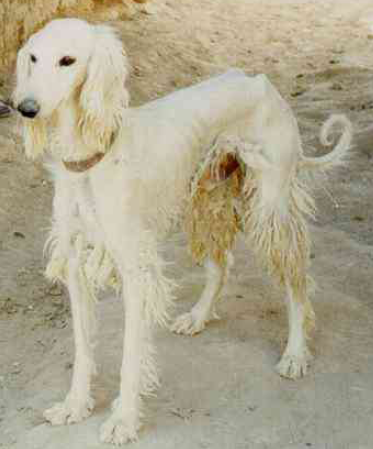
Afghan Hound Originally Persian Greyhound Best Breed and Breeders

The Afghan Hound, a sight hound, developed as a hunting dog in the Balkh, Barakzai, and Kurram valley areas of ancient Egypt, known now as Afghanistan. The earliest records of the Afghan date back some 8000 years ago to this area of ancient Egypt. These records show that they were used to hunt such animals as mountain deer, plains antelopes, hares, wolves, and snow leopards.

How many types of Afghan Hound are there? And what of the smooth/short haired kind and Taigans? It depends on whom you ask. The reason there are conflicting bits of information and ideas about the Afghan Hound and related “breeds” is that there isn’t any real definitive authority on dogs. Breed classifications, like Afghan Hound, aren’t some sort of taxonomic, scientifically arrived at conclusion but rather an agreement among those who care to agree. An Afghan Hound is an Afghan Hound because a number of people classify and identify a particular type of dog as an Afghan Hound and nearly everyone that considers it agrees. If you don’t believe it, just ask us!

Afghan Hound

This is true for every breed not just the Afghan Hound. The need for a classification like “breed” came about because domestic dogs evolved along the side of man. It was selectively bred to fill the various needs of man, resulting in various forms distinct from one another. Terrier form evolved from the need to “go to ground”, Collie form evolved from herding and Greyhound from a type of hunting called coursing. Breed classification came from form and form came from function. The separation in those processes, the defining of forms, function causing forms, is important.

In a period around the turn of the last century Western man really started to take this seriously and because dogs that performed similar functions weren’t all exactly alike, finer distinctions were necessary. Scottish Deerhounds and English Greyhounds were both coursers but obviously not the same. Harrier, Foxhound; Pembroke, Cardigan; English Setter, Irish Setter all finer distinctions requiring a finer definition and all able to be found “on site” in the place where this started, in England.

Afghan Hound Originally Afghanistan
Into this environment enters the Persian Greyhound. England was busy expanding its Empire and the Oriental Sighthound was brought back for display like so many trophies. They were quite a curiosity and caused a bit of a stir with the newly emerging middle class with leisure time to pursue those curiosities. Mainly the prize of Military men and their wives the Oriental Sighthound came from such far off and exotic places as Egypt, Syria, Persia and Afghanistan. Persian Greyhound, the jingoistic breed name given at the time, worked well enough for a decade or two at the dog shows still in their infancy.

Unlike today there weren’t so many group distinctions, just sporting and working (herding) were all that was needed and for the Persian, like other trophies, there was the “Foreign” class. Dogs in the foreign class weren’t distinguished by function. But as dog shows and the interest in them grew, so too did competitive emotions. Variety in the show ring started to become synonymous with disparity.

Unfair advantages due to type became the claim. In an early documented case the dog pictured at right, either Persian Arrow or Lightning, (it isn’t clear wwas claimed by the owner to be at a disadvantage against Lady Amherst’s Persians. Amherst was an early Persian Greyhound expert and many of you will know that her dogs were later to be called Salukis.

At this stage, circa 1907, the fancy was becoming aware of great variety in Persians. A number had made it back to England, including Zardin and Afghan Bob. Amherst’s own were, of course, becoming familiar to all. There can be no dispute that between Zardin and Amherstia’s Persians there was a wide range of variety but to look at the picture of Persian Lightning, (or Arrow), above, it is hard to imagine much difference in this dog and Amherst’s Salukis or even modern day Salukis. As the Sporting Press crowned Persian authority, Amherst who had spent time in Egypt while her husband was on duty there, was called on to “rule” on the issue of “types”. She did the best she could to mollify the dissent and clarify the apparent differences.

Afghan Hound

She borrowed from published information outside her immediate experience in Egypt and possibly Arabia texplain that there were many “Natypes. Persian Lightning and Arrow were placed in the Kirghiz Greyhound bbox, known as Taigans today, by Amherst.It’s doubtful that Lady Amherst had any direct experience with the hound of Kyrgizstan but as the authority, her “classifications” went unquestioned anational type breed borders, like those seen in Western breeds became the order of the day.

Without ever looking back we’ve continued to build our breed boxes in the same way to this day. Into this atmosphere came the Bell-Murrays and the Amps from Afghanistan in similar military circumstances to Amherst. Much has been made of the “distinct” types the Bell-Murrays had as opposed to the Ghazni (Amps) kennel. A closer examination reveals a distinction in imagination only.

Both kennels had Oriental Sighthounds of varied type, compact and rangy, well covered in coat and patterned (feathered) coats. A “proper type” battle ensued that wasn’t drawn along the lines of mountain and desert but more simply on the lines of “correct”. More to the point, however, the battle was for the breed throne. Since at the time no Kennel Club judge could be expert on a dog they had no experience with, like the Oriental Greyhound, they had to look for expertise from sources that were familiar. If one could convince others they were correct, that they were the experts, their dogs were therefore also correct.

Afghan Hound Recommended Food
Native food supplies for this breed would have included the mountain deer, plains antelopes, hare, wolves, snow leopards, fox, and fowl. The Balkh, Barakzai, and Kurram valley areas also provided grain crops
such as wheat, corn, barley, and brown rice. There was a form of beef cattle in this area. However, the prevalent religions forbid the use of beef as a food source for humans and dogs alike. Therefore, I feel it is
unlikely that the Afghan was exposed to this form of meat. For the Afghan hound I recommend foods with a high fiber, high carbohydrate percentage. The protein should be from sources of poultry and lamb, the carbohydrates from brown rice and wheat. For this breed I recommend you avoid foods based on soy, beet pulp, horse meat, or beef and their by-products.

Bernese Mountain Dog and Bernese Mountain Dog Puppies Special Breed

Bernese Mountain Dog Named for the Canton of Bern, the BMD was developed as a working dog with origins in the farm areas of Switzerland. Historically, Berners were used as general purpose farm dogs; their large, hardy frames and their calm-natured, people-oriented temperaments made them ideal for driving cattle, pulling carts to market, watching the farm and being farmers’ companions.

Bernese are a highly versatile breed. Bernese Mountain Dogs and their human companions enjoy competing in conformation, obedience, agility, tracking, herding and carting. Bernese Mountain Dog also make wonderful therapy dogs, bringing cheer to others. Individual dogs will be serviceable for these various activities depending on their aptitude, structure, temperament and character. Not every Bernese Mountain Dog will perform well in every event.

Berners Mountain Dog Puppies
 Bernese Mountain Dog puppies can be obtained from a variety of sources. As the breed has gained popularity, it has attracted the attention of people seeking to profit from the high demand. Your best chance of getting a puppy that will mature into a healthy dog lies with a conscientious breeder who is active in learning about the breed and continually improving his or her lines of dogs. To find such a breeder your search should employ a variety of tactics. Contact the BMDCA and regional BMD clubs for breeder contact information. Locate Berner owners and engage them in discussions. Attend dog shows and events and talk with Berner people there. Tap as many good sources as you can. You will learn a lot about the breed and the vast array of people involved in it good and bad.

As with most purebreds, Bernese are affected by a variety of genetic diseases and other health issues. These include cancer, hip and elbow dysplasia, other orthopedic problems, eye diseases, cardiac disease, allergies, hypothyroidism, autoimmune diseases, von Willebrand’s Disease (a blood clotting disorder), bloat and more. It is important to work with a breeder who is knowledgeable about the health risks in his or her line of dogs, and will share this knowledge with you so you can decide what risks are acceptable to you.

The Bernese Mountain Dog is a large, striking, tri-colored, long-haired dog. They are sturdy dogs. Measured at the withers, dogs are 25 to 27 ½ inches; bitches are 23 to 26 inches. In terms of weight, dogs and bitches generally range from 80-120 and 70-100 pounds, respectively but be aware that even though this is a wide range some Bernese still fall outside it.

Berners Mountain Dog

The breed should be dry mouthed, but not all Berners Mountain Dog are. It seems that pendulous lips tend toward sloppier mouths and drooling. Look at the parents as well as the puppies to get an idea whether the pup you are considering has close-fitting or loose, floppy lips.

The true answer to that question is it depends on availability, demand and how discriminating a buyer you are. Waiting for a puppy from a conscientious breeder whose bloodlines are particularly appealing to you might take many months and even a year or more. Be patient. A quality puppy is worth the wait. Red flags: Buyer beware! No matter how caring they may seem while making the sale, some sellers attempt to use Bernese Mountain Dogs as moneymaking machines. Buy from a conscientious breeder. Do your homework. Ask good questions and require that you be provided with a copy of the multi-generation pedigree, health certifications and written contract before you buy the puppy. Talk to others who have purchased puppies from the seller. Make sure the seller is committed to the welfare of his/her own dogs and the breed.

For allergy-prone people, this may not be the ideal breed. For those keeping a meticulous house, daily sweeping or vacuuming may be necessary during much of the year. And yes, you may find hair in your food! Bernese generally like to please their people if they respect them. Some dogs are challenging and it takes more work to develop their desire to please. Bernese are smart enough to manipulate their owners. Generally, most Bernese Mountain Dog are very sensitive, impressionable dogs. Some may be “soft”. Bad or scary experiences are hard to overcome and are best anticipated and avoided. Only positive training techniques should be used. These dogs have lots of heart, and their owners need to understand their dogs’ unique, psychological make-up.

With the training essential for ownership of a large working breed, adult Berners Mountain Dog are generally gentle, easygoing and tolerant. They are not prone to excessive barking unless left unattended for too long. They do not do well when isolated from people or activity. This breed can be slow to mature, and young dogs can be very active compared to the trained, often mellow adult. While Berners should not be shy, this tendency does run in the breed. Due to temperament concerns it is very important to expose Bernese to a wide variety of people, places and other animals, especially in their first year of life.

This depends on the individuals involved the child, the dog, and perhaps most importantly, the parents. The Bernese is NOT a “no-brainer” choice of breed for a family with small children. Many Berner puppies go through a “mouthy” stage that can be unwittingly encouraged by young children. Many Berners’ bodies grow faster than their “brains,” which can be a challenge to the inexperienced dog owner.

Most Bernese Mountain Dog puppies will be able to adjust to the other members of their new families – human, canine, feline and other pets. The greater the size difference, the more supervision and training may be required. Also, much depends on the individuals involved. Some Berners are more nurturing, while others may have a stronger prey drive. The majority are somewhere in the middle and will respond to guidance in regard to their interactions with other family members.

the average lifespan of the Bernese Mountain Dog is less than 8 years. Some live beyond ten years and some live only a short time. Why? The most common cause of premature (prior to 7 years) death is cancer. Selective breeding for physical and character traits unique to the BMD over the past hundred years may have contributed inadvertently to the breed’s genetic predisposition to develop health problems. To reverse this trend, it is critical that breeders now collect health information on whole families of dogs, share that information through our open databases, and use that information to make wise breeding decisions to improve health and longevity.

Sunday, March 27, 2011

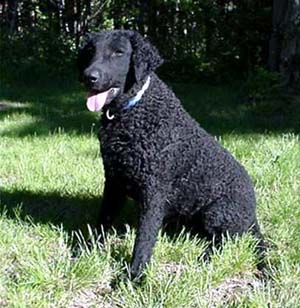
Curly Coated Retriever Water Resistant Coat Breeders Grooming and Care

The Curly Coated Retriever Breed developed in the 16th century as both an upland game dog and water retriever. An English sportsman used two breeds of Spaniel and a retrieving Setter to produce the Curly Coated Retriever we now know. It has an extremely steady temperament and is very good around children. As a retriever, it has a very tender mouth that will not damage the game. The Curly Coated Retriever is now the most popular retriever in both New Zealand and Australia.

The Curly-Coated Retriever is a large, hardy dog, who's body is slightly longer than it is tall. The mind is longer than it is wide. The topline is degree as well as the neck is powerful and slightly arched. The muzzle is wedge-shaped tapering, rounding in the bottom. The stop is shallow and sloping. The nose is black on black canines and brown on liver dogs, with wide nostrils. The teeth meet in a scissors bite. The hanging ears are somewhat small. The large, predominate, almond shaped eye are black or brown in black canines and brown or amber in liver colored dogs. The chest is deep but not as well wide. The tail reaches roughly to the hock and is covered in curly hair, carried directly or almost directly and is never docked. once the curls about the tail are trimmed the tail tapers to some point. Dewclaws are usually removed.

Curly Coated Retriever Best Hunter Dogs

Curly Coated Retriever the water-resistant coat is incredibly unique coat with small, tight, curls that cover every component of your body accept for that forehead, face, front of forelegs, and feet. The coat safeguards the dog from brambles and icy waters. Coat colors are available in black or liver. The coat could possibly have a small bright patch, but it is not preferred in the show ring.

Curly Coated Retriever Training
The Curly Coated Retriever breed is sensitive, independent, and has a tendency to become stubborn. Early socialization and obedience instruction is crucial. It is crucial that instruction sessions be brief and varied as they become bored quite easily. Curly Coated Retriever's do not respond to harsh or heavy-handed methods. instruction should be executed with firmness, fairness, and consistency.

CurlCurly Coated Retriever Temperament
The Curly Coated Retriever was initially developed as a gun dog and their temperament and conformation reflect this purpose. Curlies are still used in lots of countries as bird hunting companions, such as in both upland and waterfowl hunting. Like most retrievers, they are valued as pets and so are a lively and fun-loving breed. As prolonged since the Curly has enough exercise, it could be calm and laid back again in the home environment, which would make them both a terrific activity dog along with a placid member of the family.The Curly can be sometimes aloof with strangers but are usually incredibly loyal and affectionate with their owners and family. Curlies are very intelligent in general, but instruction can sometimes be difficult as they can easily
get bored with repetitive training. They rank 41st in Stanley Coren's The Intelligence of Dogs, becoming of typical working/obedience intelligence.

Curly Coated Retriever

Curly Coated Retriever Care
Curlys are incredibly typical shedding dogs. The curly hair of the Curly-Coated Retriever is relatively uncomplicated to care for. They ought to be washed, but brushing and combing the coat will make the coat frizzed. Make sure to wet the coat soon after grooming to recommence the curls. Some slicing could possibly be great to clear up the curly hairs. These canines do require normal brushing, especially during the shedding seasons.


Curly Coated Retriever Grooming
Curlies are just one coated breed with no undercoat, as well as the small, tight curls of the show-standard dog are incredibly uncomplicated to maintain. A Curly kept as a companion or as a hunter do not must be elaborately groomed, but ought to be kept clear and absolutely free of mats for that wellness of the dog. Bathing ought to be as needed using a dog shampoo. Show ring exhibitors commonly trim feathering from your tail, ears, belly, legs, and feet. Trimming is not required when exhibiting a Curly at a conformation dog show, but most judges could possibly discount the dog if it is not trimmed. Shaving of your body coat is undesirable.

Curly Coated Retriever

Curly Coated Retriever Recommended Food and Health
For the Curly Coated Retriever I recommend foods that consist of poultry and wheat. The best blend for this breed should contain very high amounts of the poultry fat. I also recommend you avoid feeding a commercial food that contains any beef, soy or white rice to a Curly Coated Retriever. Native food supplies for this breed and its forefathers would have been upland game birds, such as chukker and quail, and waterfowl, such as duck and goose. Grain crops of wheat and corn grew in this environment. These grains are still used by sportsmen today to attract wild game birds along their flyway.

Papillon Dog The Speed Running and Highly Jumping

The Papillon Dog has been breeding true to its present day standards for the last 700 years in France. There are unsubstantiated rumors that over 700 years ago this breed lived in coastal Italy and came from a dwarf spaniel. The name "Papillon" in French means "butterfly " and relates to the breed's ears, which are mobile, erect and fringed with fine hair. There is also a white blaze that runs up the forehead of most of these dogs to further enhance the butterfly appearance. The Papillon also has what some may call a "dainty" appearance, but the breed is not at all what anyone could mistake for dainty. Historically they were a very active ratter and have always been a healthy breed.

Papillon

Most Papillon owners have witnessed their dog’s natural athletic prowess in everyday life, be it jumping in place (often two or three feet high), leaping on and off furniture in a single bound, or running “zoomies” around the yard with lightning-fast speed. The sport of agility harnesses this energy and channels it in a constructive manner on an obstacle course, while teaching your dog to communicate with you using both verbal and non-verbal cues. Agility is the fastest-growing dog sport in America, not just among human/dog teams who compete in agility trials, but also among average pet owners who want a fun activity they can do with their dogs in their own backyard using some basic pieces of training equipment that can be purchased fairly inexpensively over the Internet or at a local pet shop.

Shirley Murphy began participating in agility in 1992 with her Papillon, Willie, who has since earned numerous championship titles. Willie, aka MACH2 UGRACH Calypso Oui Willie Wonka U-CDX UDX2 NF RA VPA, qualified for and participated in the AKC National Agility Championships three times, finishing the 2007 competition in the top 25 percent of his jump height. (Dogs of similar sizes may perform jumps at variable heights, depending on the class in which they are competing. For example, the AKC Preferred class allows dogs to jump four inches less than the height they “measure into.”) The prefixes and suffixes surrounding Willie’s registered AKC name may seem like a secret code, but each abbreviation represents a title he has earned (see definitions at the end of this article) and are analogous to the CH prefix of champion conformance dogs.

Papillon Running and Jump

Jennie Larkin caught the agility bug about 12 years ago with her Canaan Dog, Tycho, and remains extremely active in the sport today with her Papillon, Bo. “You learn to work together as a team,” Larkin said. “As a trainer, you have to learn how to read your dog even better, know what motivates your dog, and how to handle him in many different situations. From the dog’s end, he learns how to read you and perform consistently even in new and sometimes trying situations, which requires a deep level of trust.” Bo (U-CD Waytogo Fuligin Beau Tay CDX RE NA OAJ NF SSA SJ) has earned six agility titles, winning his first big agility weekend at the 2008 Papillon Club of America National Specialty in Frederick, Md. Larkin’s retired Canaan Dog, Tycho (CDCA-DOTY-2001 Fuligin Ged Tycho CDCA-HC CDCA-V CDX RE AX AXJ NAP NJP), also has a proven success rate in agility competitions.

Not everyone who participates in agility goes on to compete in trials to earn titles. For example, some of the members of the Northern Virginia Papillon Meetup Group, who want to learn agility with their dogs purely for the fun of it, have signed up for a papillon-only basic agility class with trainer Anne Davis, of Rudy’s Friends Dog Training, Inc. Davis, who utilizes positive training techniques, explained, “This is a great training experience, which helps to strengthen the bond between yourself and your dog. Agility is a wonderful way to build confidence in dogs and to make training fun. The goal is to enjoy a new activity with your dogs so they will better understand that good things happen when they respond to you.”

Papillon Dog

One member of this class, Natalie Rainey, joined purely to increase her dog’s confidence. Rainey’s pap, Cozy, was born deaf and is socially awkward both with humans and dogs. “Cozy often misses the ‘warning’ signs from her packmates that she is not behaving in a way that they find acceptable,” Rainey said. “So she is often startled by the ‘suddenness’ of their stage two warning, which is usually physical.”

Rainey discussed Cozy’s handicap with Davis prior to signing up for the basic agility class. Davis utilizes hand signals in all of her training, which is a perfect fit for a deaf dog. “It is my hope that by involving Cozy in agility training using non-verbal cues, I will help her to focus and fine-tune her visual observation skills so that she will become confident about knowing what is expected of her in a given circumstance,” said Rainey. “Obviously, I can’t decipher for her the non-verbal cues her pack gives her – and save her from future ‘oops’ moments – but I hope that agility training will give her an area where she feels in-the-know and will serve as a foundation for confidence spreading into other aspects of her life.”

Murphy and Larkin offer some words of advice for pet owners who are just getting started with agility. “Find great trainers to help teach you and make sure that the environment is safe for your small dog,” said Larkin. “Get your Papillon a full veterinary check-up before you start training to clear his patellas and heart [two potential health problems for paps]. Keep him in lean condition, as carrying extra weight even a few ounces on a Papillon can make the running and jumping much harder work. Build ‘play drive’ in your dog. And most of all, have fun and don’t worry.”

Pupillon Puppies

Murphy stressed the importance of using positive training. “When you use such methods, the dog performs because he likes to and because he gets rewards, in the form of your attention and love, as well as play and the ever-popular ‘cookies,’” she said. “As much as I would like to believe that people are leaving the old methods behind, I know there are still many people who get their dogs to perform through intimidation and physical punishment, and I believe in that case, many of these dogs are performing out of fear, not out of pleasure and joy,” said Murphy. She also advised not to rush the training or skimp on foundation work. “Wait until the dog is around one year old before you do full-height jumping, full-height A-frame and any extensive drilling on weave poles,” Murphy said. “Always think of your dog, his safety, and your relationship first and the competition second. When you have a training session, plan what you want to train on front crosses, rear crosses, distance, independent contact performance and set up a course to accomplish that,” Murphy said. “Don’t just run a course with no purpose to it.”

For the Papillon Dog recommend foods that are a blend of poultry, lamb, potato, wheat, and corn. However, I feel you should avoid feeding a Papillon any form of soy products, rice, ocean fish, horse meat, or beef. Native food supplies for this breed would have been the type found on a 16th century farm in Central France. The meats would have consisted of the farms' rodents, poultry, and mutton with crops of in ground vegetables, wheat, and corn.

Tuesday, March 15, 2011

Chow Chow Cobby, Powerful of Medium Size and Strong Muscular Dog

Chow Chow Dog Breeds and Breeders
The Chow Chow originated in China (Tibet) where it was raised as a meat source for human consumption. This was done on a scale that can be compared to the sheep ranches of New Zealand or the cattle ranches in our own country today. Since the Chow Chow was used as a meat source for human consumption, it was fed a diet of grains and vegetables. One indicator of the Chow Chow's development as a vegetarian is the difference in the mouth, jaw, and tooth structure from those breeds that developed as "meat eaters." For example, the Chow has a set of teeth that are flatter than the sharp incisors found in the carnivorous breeds.

The Chow Chow has two other distinctive physical features that are unique to this breed of dog; first, a blue-black tongue, and second, a lack of angulation in the lower joint of the hindlimbs. The primary food sources of the Chow Chow's native environment were rice, wheat, soy, and some occasional fish. Thus, a blend of these foods would be the ideal diet for the Chow Chow. Conversely, the worst blend would contain beef, horse meat, lamb, and poultry or any of their byproducts.

Chow Chow Dog

Chow Chow Origin Purpose and General Appearance

The Chow Chow is an ancient breed of Northern Oriental origin. As a working breed in its area of origin, the Chow Chow was used to guard and hunt. Today, the Chow is primarily a family companion dog. A cobby, powerful dog of medium size, active and alert, with strong, muscular development and perfect balance. Body squares with height of leg at shoulder; head is broad and flat, with short, broad, and deep muzzle, the whole supported by straight strong legs. Tail carried well over the back. Clothed in a off-standing smooth or rough double coat, in the rough variety the head is accentuated by a ruff; dogs to look masculine. Bitches to look feminine. When comparing the different sexes, allowance be made for bitches who may not have as much head and substance. The Chow is a masterpiece of beauty, dignity, and untouched naturalness.

Chow Chow Temperament
Dignified, with keen intelligence, independent spirit, aloof and reserved with strangers. Aggressiveness or timidity is undesirable. Because of its deep-set eyes, the Chow has limited peripheral vision and is best
approached from the front.

Chow Chow Size
Average size of bitches is 43 to 51 cm (17 to 20 inches) at the shoulder, of dogs, 46 to 53 cm (18 to 21 inches) at the shoulder. In every case, consideration of overall balance and type should take precedence over
size.

Chow Chow Coat and Colour
Coat:: There are two types of coat, rough and smooth. Both are double coated.
Rough: the coat is abundant, dense, straight, and off standing; rather coarse in texture with a soft, thick, woolly undercoat. Coat and ruff generally longer in males, than in bitches. Tail well feathered. Texture and condition should be given greater emphasis than the length. There should be no obvious trimming or shaping except for the paws.

Smooth: should have a harsh, dense, smooth outer coat with a woolly undercoat, but the smooth’s outer coat is short and gives a sleek appearance. There should be no obvious ruff or feathering on legs and tail. The Smooth Chow Chow is judged by the same standard as the rough variety with the exception of coat length.

Chow Chow Dog" width="" height=""/>

Chow Chow Colour
It may be any clear colour, solid throughout, with lighter shadings on ruff, tail, and breechings.

Chow Chow Head
The Head is large in proportion to the size of the dog. It is proudly carried, not over exaggerated as to make the dog seem top heavy, or to result in a low head carriage.

Skull broad and flat: well filled under the eyes; moderate stop. Expression essentially dignified, lordly, scowling, discerning, sober, and snobbish-one of independence. Excessive loose skin is not desirable.

Muzzle is short in comparison to length of skull but not less than 1/3 of head length. Broad from eyes to end of nose, and of equal depth. The lips somewhat full and overhanging, but not pendulous.

Teeth strong and level, with a scissors bite; should neither be overshot, nor undershot.

Nose large and broad. In blue or cream, black noses are preferred, but blues may have a slate coloured nose and creams may have a brown or liver coloured nose. In all other colours the nose must be black.

Eyes dark, deep set of moderate size, and almond shaped, pupils should be visible.

Ears small, thick, slightly rounded at tip, stiffly carried with a slight forward tilt, the inner corner of the ear to
be in line with the outer corner of the eye. They should be placed wide apart, on top of the skull. This all contributes to the essential dignified lordly, discerning, scowling expression, one of independence.

Tongue is blue-black; the tissues of the mouth should approximate black. A solid black mouth and gums are preferred.

Chow Chow Neck
Strong, full, set well on the shoulders nicely arched and of sufficient length to carry the head proudly, well above the top line when standing.

Chow Chow Forequarters
Shoulders muscular, slightly sloping, forelegs perfectly straight, with heavy bone and upright pasterns, placed well apart and parallel. Elbow joints set well back alongside the chest wall, elbows turning neither in or out.
Feet round, catlike with thick pads, standing well up on the toes both front and rear. Dewclaws may be removed.

Chow Chow Body
Short, compact, close coupled, strongly muscled, broad and deep. Back short, straight, and strong. Chest broad, deep, (never narrow) and muscular, with well-sprung ribs, but not a barrel. A narrow chest is a serious fault. Loins broad, deep, and powerful, and well let down in the flank giving an overall appearance of squareness. The topline is straight, strong and level from the withers to the base of the tail.

Chow Chow Hindquarters
Hind legs straight-hocked, muscular, and heavy boned. Rear and front bone approximately equal. Stifle shows little angulation, hock joints well let down, must be strong, well knit, never bowing or breaking forward or to the side. Hock joint and metatarsals to be in a straight line below the hip joint. Feet same as forequarters.

Chow Chow Tail
Set well up and carried closely to the back, following the line of spine at the start.

Chow Chow Puppy" width="" height=""/>

Chow Chow Gait
Completely individual to the breed. Short and stilted because of a straight stifle and straight hocks. Sound, straight moving, agile, quick and powerful, never lumbering. It is from the side that the unique stilted action is most easily viewed and assessed. The rear leg moves up and forward from the hip in a straight, stilted pendulum like line, with a slight bounce in the rump, legs extend neither far forward nor backward. There should be no roll through the midsection. Viewed from the rear, the line of bone from the hip joint to pad remains straight as the dog moves.

As speed increases, the hind legs incline slightly inward. Viewed from the front, the line of bone from shoulder joint to pad, remain straight as the dog moves. As speed increases, the forelegs may incline slightly inward but the front legs must not swing out in semi circles nor mince or show any evidence of hackney action. Somewhat lacking in speed, the Chow has excellent endurance.

Disqualifications
Nose spotted or distinctly any other colour than black except in blue Chows, which may have solid blue or slate nose and in creams, which may have a brown or liver coloured nose. Tongue red, pink or obviously
spotted with red or pink. Drop ear or ears. A drop ear is one which is stiffly carried or stiffly erect, but which breaks over at any point from its base to its tip or which lies parallel to the top of the skull.

Monday, March 14, 2011

Brittany Spaniel High Quality Breeders Shoulders Sloping and Muscular Dog

Descending most probably from the “dogs of Oysel which are spanning when a sparrowhawk is being thrown” and which, in the Middle Ages, were called “spaniels” (because they spanned under the hunter’s net) or “setters” (because by doing so they “set” the game) in contrast to hounds. The Brittany Spaniel belonged to the small bird dog breeds that crouched under the hunter’s net, which, with time, became the pointers of today.
 
In the French province of Brittany Spaniel , these dogs conformed to the harsh nature of the region and acquired the typical characteristics of the Brittany country a solid and rustic nature, a matchless and natural stamina, and a stocky and compact constitution. Its colours were white and black, white and brown, sometimes with some orange or even tricolour. They were deadly hunters and were very good at catching feather, and tracking hares and rabbits. In the second half of the last century, crossbreeding with English dogs introduced to the continent by lords who came to hunt partridges and woodcocks, led to the happy results of improving their scent and their style.

Brittany Spaniel Breeders
The Brittany Spaniel Breeders developed in an area of today's France that was controlled by the kings of England during the Middle Ages. This area was a popular hunting territory for the Norman nobles whose ancestors crossed the English Channel and successfully conquered England in 1066. These Norman nobles were responsible for the development of a hunting dog, which is the same Brittany Spaniel we know today.

The primary nutrients of their native environment would have been poultry, fish of the trout family, beets, and potatoes. I note that this was a swampy area and supported few grain crops. I feel it was this factor that led to a critical difference between the Brittany Spaniel's nutritional requirements and those of the English Springer Spaniel especially in the area of carbohydrate needs.
Brittany Spaniel General Appearance
A compact, closely-knit dog of medium size, a leggy Spaniel having the appearance as well as the agility of a great ground covered. Strong, vigorous, energetic, and quick of movement. Not too light in bone, yet never heavy boned and cumbersome. Ruggedness, without clumsiness, is a characteristic of the breed. So leggy is he that his height at the withers is the same as the length of his body. He has no tail, or at most, one not
longer than 4 inches (10 cm).

Brittany Spaniel Head
Skull: Medium length (approximately 4-1/2 inches (12 cm). Rounded, very slightly wedge-shaped, but evenly made. Width, not quite as wide as the length (about 4-3/8 inches (11 cm) and never so broad as to appear
coarse, or so narrow as to appear racy. Well-defined, but gently sloping stop effect. Median line rather indistinct. The occipital crest only apparent to touch. Lateral walls well rounded. The Brittany should never
be “apple-headed” and he should never have an indented stop. (All measurements of skull are for a 19-1/2 inches (50 cm) dog.

Muzzle: Medium length, about two-thirds the length of the skull, measuring the muzzle from the tip to the stop, and the skull from the occipital crest to the stop between the eyes. Muzzle should taper gradually in both horizontal and vertical dimensions as it approaches the nostrils. Neither a Roman nose nor a concave curve (dish face) is desirable. Never broad, heavy or snipey.

Nose: Nostrils well open to permit deep breathing of air and adequate scenting while at top speed. Never shiny.

Colour: To tone in with the darkest body colour according to whether the dog is orange and white, or liver and white. Dark nose and pigment are permitted in orange and white dogs.

Size: Weight: Should weigh between 30 and 40 lb. (14-19 kg). Height: 17-1/2 to 20-1/2 inches (44-52 cm) measured from the ground to the highest point of the back, the withers.

Mouth: Lips tight to the muzzle, with the upper lip overlapping the lower jaw only sufficiently to cover under lip. Lips dry so that feathers do not stick. Well-joined incisors. Posterior edge of upper incisors in contact with anterior edge of lower incisors, thus giving a true scissors bite.

Eyes: Well set in head. Well protected from briars by heavy expressive eyebrow. Skull well-chiseled under the eyes, so that the lower lid is not pulled back to form a pocket or haw for catching seeds, dirt, and weed dust. Judges should check by facing head down to see if lid falls away from the eye. Preference should be for darker-coloured eyes, though lighter shades of amber should not be penalized.

Ears: Set high, above level of the eyes. Short and leafy, rather than pendulous, reaching about half the length of the muzzle. Should lie flat and close to the head, with the tip rounded very slightly. Ears well covered with dense but relatively short hair, and with little fringe.

Faults: Tight nostrils should be penalized. A two-tone or butterfly nose should be severely penalized. Drooling to receive a heavy penalty. Flews to be penalized. Overshot or undershot jaw to be penalized heavily. A prominent, full or pop eye should be heavily penalized. It is a serious fault in a hunting dog that must face briars. Light and mean looking eyes to be heavily penalized.

Brittany Spaniel

Brittany Spaniel Neck
Medium length, not quite permitting the dog to place his nose on the ground without bending his legs. Free from throatiness, though not a serious fault unless accompanied by dewlaps. Strong, without giving the impression of being overmuscled. Well set into sloping shoulders. Never concave or ewe-necked.

Brittany Spaniel Forequarters
Shoulder blades should not protrude much. Not too widely set apart with perhaps two thumbs width or less between the blades. At withers, the Brittany is slightly higher than at the rump. Shoulders sloping and muscular. Blade and upper arm should form nearly a 90 degree angle when measured from the posterior point of the blade at the withers to the junction of the blade and upper arm, and thence to the point of the
elbow nearest the ribs. Straight shoulders do not permit sufficient reach. Viewed from the front, front legs perpendicular, but not set too wide as in the case of a dog loaded in shoulder.

Elbows and feet turning neither in nor out. Viewed from the side, practically perpendicular to the pastern. Pastern slightly bent to give cushion to stride. Not so straight as in terriers. Leg bones clean, graceful, but not too fine. One must look for substance and suppleness. Height to the elbows should be approximately equal distance from elbows to withers.

Faults: Falling pasterns are a serious fault. An extremely heavy bone is as much a fault as spindly legs.

Brittany Spaniel Body
Body length approximately the same as the height when measured at the withers. Body length is measured from the point of the forechest to the rear of the haunches. Back short and straight. Slight slope from highest point of withers to the root of the tail. Never hollow, saddle, sway, or roached back. Chest deep, reaching the level of the elbow. Neither so wide nor so rounded as to disturb the placement of the shoulder bones and elbows, which causes a paddling movement, and often causes soreness from elbow striking ribs.

Ribs well sprung, but adequate heart room provided by depth as well as width. Loins short  and strong. In motion the loin should not sway sideways, giving a zigzag motion to the back, wasting energy. Distance from last rib to upper thigh short, about three to four finger widths. Slight drop from hips to root of tail. Flanks rounded. Fairly full. Not extremely tucked up, nor yet flabby and falling.

Faults: A long body should be heavily penalized. Narrow or slab sided chest are a fault. Narrow or weak loins are a fault.

Brittany Spaniel Dog

Brittany Spaniel Coat and Colour
Hair dense, flat or wavy, never curly. Not as fine as in other Brittany Spaniel breeds, and never silky. Furnishings not profuse. The ears should carry little fringe. Neither the front nor hind legs should carry heavy featherings. Skin fine and fairly loose. (A loose skin rolls with briars and sticks, thus diminishing punctures or tearing. But a skin so loose to form pouches is undesirable). Colour dark orange and white, or liver and
white. Some ticking is desirable, but not so much as to produce belton patterns. Roan patterns or factors of any of these colours are permitted. The orange, and liver are found in standard particolour, or piebald patterns. Washed out or faded colours are not desirable.

Faults: Long, curly, or silky hair is a fault. Any tendency towards excessive feathering should be severely penalized as undesirable in a sporting dog which must face burrs and heavy cover.

Brittany Spaniel Hindquarters
Broad, strong, and muscular, with powerful thighs and well-bent stifles, giving a hip set well into the loin and marked angulation necessary for a powerful drive when in motion. Thighs well feathered, but not profusely,
halfway to the hock. Stifles well bent. The stifle generally is the term used for knee joint. If the angle made by the upper and lower leg bones is straight, the dog quite generally lacks drive, since his hind legs cannot drive as far forward at each stride as is desirable. However, the stifle should not be bent so as to throw the hock joint far out behind the dog.

Since factors not easily seen by the eye may give the dog his proper drive, a Brittany should not be condemned for straight stifle until the judge has checked the in motion from the side. When at trot, the Brittany’s hind foot should step into or beyond the print left by the front foot.

The stifle joint should not turn out making a cow-hock. (The cow-hock moves the foot out to the side, thus driving out of line, and losing reach at each stride). Hocks, that is, the back pasterns, should be moderately
short, pointing neither in nor out; perpendicular when viewed from the side. They should be firm when shaken by the judge. Feet should be strong, proportionately smaller than other spaniels, with close-fitting, well-arched toes and thick pads. The Brittany is not “up on his toes”. Toes not heavily feathered. An ideal foot is halfway between the hare and cat-foot.

Faults: Fat and falling hindquarters are a fault. Flat feet, splayed feet, paper feet, etc., are to be heavily penalized.

Brittany Spaniel Puppies

Brittany Spaniel Disqualifications
Any Brittany Spaniel measuring under 17-1/2 inches (44 cm) or over 20-1/2 inches (52 cm) shall be disqualified from show competition. Any black in the coat or a nose so dark in colour as to appear black shall
disqualify. A tail substantially more than 4 inches (10 cm) in length shall disqualify.

Brittany Spaniel Tail
Naturally tailless, or not over 4 inches (10 cm) long. Natural or docked, set on high, actually an extension of the spine at about the same level.

Brittany Spaniel Foodand Health
Reportedly, the Brittany Spaniel can utilize a higher starch and carbohydrate to protein ratio than its English cousin (The English Springer Spaniel) when the carbohydrate source is beet pulp or potatoes. The Brittany also does poorly on blends containing corn, barley or wheat, which are good for the English Springer Spaniel.
For the Brittany Spaniel, use foods with sources of poultry, lamb, and beet pulp. Avoid foods based on beef or horse meat and their byproducts as well as any yellow corn, barley, wheat, or soy products.

Bloodhounds Dog Breed Breeder and Care Maintenance

The Bloodhound Breed and Breeder developed prior to the twelfth century in the vicinity of Constantinople. This was a seaport in the country we now know as Turkey. They have been blessed with a scenting ability that is unparalleled by any other breed of dog. Bloodhounds have a genetic tendency to hypothyroidism, which is an inability of the thyroid gland to manufacture sufficient amounts of thyroxine. Within the thyroid gland iodine molecules and protein molecules join to make thyroxine. Therefore, this process can be helped by providing the proper form of iodine for their thyroid gland to use. I feel the best form of iodine for the Bloodhound is the natural form found in sea kelp, and the worst form is any one of the artificial isotopes of iodine.

Bloodhounds

When the first Bloodhounds were exported to the USA is not known. Bloodhounds were used to track runaway slaves before the American Civil War, but it has been questioned whether the dogs used were genuine Bloodhounds. However, in the later part of the 19th century, and in the next, more pure Bloodhounds were introduced from Britain, and bred in America, especially after 1888, when the English breeder, Edwin Brough, brought three of his hounds to exhibit at the Westminster KC show in New York City. He went into partnership with Mr J L Winchell, who with other Americans, imported more stock from Britain.

Bloodhounds in America have been more widely used in tracking lost people and criminals - often with brilliant success than in Britain, and the history of the Bloodhound in America is full of the man-trailing exploits of outstanding Bloodhounds and their expert handlers, the most famous hound being Nick Carter.
In the 16th century, John Caius, in unquestionably the most important single source in the history of the Bloodhound, describes its hanging ears and lips, its use in game parks to follow the scent of blood, which gives it its name, its ability to track thieves and poachers by their foot scent, how it casts if it has lost the scent when thieves cross water, and its use on the Scottish borders to track cross-border raiders, known as Border Reivers. This links it to the sleuth hound, and from Caius also comes the information that the English Bloodhound and the sleuth hound were essentially the same, though the Bloodhound was slightly bigger, with more variation in coat colour.

Bloodhounds 

During the later 19th century numbers of Bloodhounds were imported from Britain by French enthusiasts, who regretted the extinction of the ancient St Hubert. They wished to re-establish it, using the Bloodhound, which, despite its developments in Britain, they regarded as the St Hubert preserved unchanged. Many of the finest specimens were bought and exhibited and bred in France as Chiens de St Hubert, especially by Le Couteulx de Canteleu, who himself bred over 300. Whatever few original St Huberts remained either died out or were absorbed into the new population. As a result, the Bloodhound became known on parts of the Continent as the Chien de Saint Hubert, and is recognised under that name by the Federation Cynologique Internationale.
Bloodhounds Puppies

For the Bloodhound I recommend food with a blend of wheat, brown rice, avocado, and poultry. However, I feel you should avoid feeding a Bloodhound any beef and its by-products, soy, beets, lamb, or white rice. Native food supplies for this breed would have been from their seaport environment and included ocean fish, pork, goat, wheat, brown rice, high carbohydrate vegetables, and fruits such as avocado, olive or fig.
Bloodhounds Weight Standards: m - 90 to 110 lbs., f - 80 to 100 lbs.
Height Standards: m - 25 to 27 inches, f - 23 to 25 inches
Coat: short and smooth in black or liver with tan
Common Ailments: bloat, thyroid problems

Schipperke Full Power Hunter Dog and Best Breeders

The "Little Skipper Dog" of Canines
 The Schipperke was originally bred by a canal boat captain in an effort to create a dog that would do well aboard a boat. In Flemish, Schipperke literally means "Little Skipper" because of this dog's use aboard the canal boats. Those early dogs were used primarily for two equally important purposes. They were meant to chase the small vermin that were huge problems aboard a boat. Mainly wharf rats, these vermin could wreak havoc on supplies and do incredible damage over the course of a voyage. The Schipperke were taught to hunt down these pests and kill them. The Little Skippers were also left in charge when the boat was at dock, allowing more of the crew to go ashore with the assurance that the dog would alert those left on board in the event of an intruder.

Schipperke

The origin of the Schipperke is somewhat of a mystery, though most seem to agree that the Schipperke and Belgian Sheepdog share at least some of the same lineage. It's likely that over a period of time the Schipperke was selectively bred to be smaller than the original dogs of this breed. Today, the Schipperke will reach a maximum weight of only about 15 to 20 pounds, possibly half that of the early ancestors of this breed.
Keep in mind that the Schipperke was bred for many generations to be protector of his territory - usually his boat.

Even the ancestors of this breed were likely herding dogs who were taught to protect flocks. That trait is still highly evident in the Shipperke of today. These dogs tend to be very protective, even though they're relatively small in size. Some owners say their Schipperkes simply don't realize that they're not big enough to take on any threat, and that they'll try anyway.

Schipperke

The Schipperke is a naturally tailless dog. Some canine organizations - including the American Kennel Club - accept only solid black Schipperke dogs. However, the coloration of these dogs ranges down to a pale tan and some organizations, breeders and fanciers accept or even prefer those other colors. The coat is fairly short, but with longer fur around the neck area. People may choose the Schipperke because of the short coat thinking that there'll be limited shedding and less intensive grooming necessary.

Schipperke

For the most part, this is true but it's important to note that some dogs of this breed go through a heavy shedding period. For some dogs, it's an annual event while others shed several times a year. When this happens, the dog is almost bare skinned for a period of time, though the coat that grows back in is usually very lush and beautiful.

Sunday, March 13, 2011

Australian Cattle Dog High Physical Activity Powerful

The Australian Cattle Dog Breeders in Australia in the early 1800's. This breed can trace its heritage back to being a direct descendant of four specific breeds: the Dingo, the Blue Merle Highland Collie, the Dalmatian and the Black and Tan Kelpie. It originally herded cattle in the rough outback of Australia. Here it developed not only its nutritional requirements but its legendary stamina and endurance.

The Australian Cattle Dog is a poor choice for young children and apartment living. She is a very dominant dog who needs hours of physical exercise a day and loves to chew. She can become very destructive if she gets bored. She was bred to herd cattle and may try to herd other pets, dogs and even the children in the household if given a chance. They can also be a bit nippy with kids or when annoyed. There are always exceptions to the rule and these characteristics of the breed are generalizations. She basically needs a large safe enclosure or a farm for exercise.

Australian Cattle Dog

The Australian Cattle Dog is considered a one or two person dog and is suspicious of strangers. They can be very aggressive with other dogs partly because of dominance issues. Some of these dogs have their tails cropped, especially if they are to work with swine.

The Australian Cattle Dog was developed in Australia around 1830 by stockmen needing a sturdy dog that could work hard and stand the rigors of an extreme environment. There is controversy as to which dogs actually make up the base stock of this breed. The Dingo (native wild dog to Australia), the Dalmatian, the Australian Kelpie, the Bull Terrier, the Blue Italian Greyhound, the Rough Haired Scotch Collie, the Blue Merle Collie, the Old English Sheepdog, and the Smithfield are some of the dogs that probably make up this breed.

Australian Cattle Dog

As with dogs from other working breeds, Australian Cattle Dogs have a good deal of energy, a quick intelligence, and an independent streak. They respond well to structured training. They are not aggressive, but form a strong attachment with their owner and can be very protective of them and their possessions. They are easy to groom and maintain. The most common health problems are deafness and progressive blindness (both hereditary conditions) and accidental injury; otherwise, they are a robust breed with a lifespan of 12 to 14 years. Australian Cattle Dogs participate in a range of activities, from obedience, agility and herding competitions, to participating with their owners in hiking, flying disc, and endurance events, and working as therapy or assistance dogs.

Native food supplies for this breed would have been those found in the Australian outback (a high desert environment) and would have included ground vegetables, wheat, oats and meats from beef, rabbit, and kangaroo. A special note concerning the meats; all the meats from this area have
a very low fat to muscle ratio.

Australian Cattle Dog Puppies

The Australian Cattle Dog is one of the dog breeds affected by progressive retinal atrophy. They have the most common form, Progressive Rod/Cone Degeneration (PRCD), which causes the rods and cones in the retina of the eye to deteriorate later in life, and the dog becomes blind. PRCD is an autosomal recessive trait and a dog can be a carrier of the affected gene without developing the condition. The gene mutation has been mapped to canine chromosome 9 and the mutation can be identified, if present, through DNA testing. It is thought that the incidence of carrier dogs could be as high as 50%.

Australian Cattle Dogs demand a high level of physical activity. Like many other herding dog breeds, they have active and fertile minds and if they are not given jobs to do they will find their own activities which might not please the owner. They will appreciate a walk around the neighbourhood, but they also need structured activities that engage and challenge them, and regular interaction with their owner. While individual dogs have their own personalities and abilities, as a breed Australian Cattle Dogs are suited to any activity that calls for athleticism, intelligence, and endurance.

Approximate Adult Size. The Australian Cattle Dog male can be 18 to 20 inches at the withers (highest point of the shoulder) and the female can range from 17 to 19 inches at the withers. Either sex can range in weight from 30 to 50 pounds.

Australian Cattle Dog Puppies

Australian Cattle Dog Special Health Considerations. The Australian Cattle Dog is relatively healthy but there are a some serious genetic problems to be concerned about. Canine hip dysplasia (genetic based looseness in the hip joint that can lead to arthritis pain and lameness) is a serious one. Some have deafness problems and others can be prone to juvenile cataracts or progressive retinal atrophy. There are also hypothyroidism (sluggish thyroid gland which can result in weight), glaucoma, skin lesions, liver abnormalities and osteochondritis.

Australian Cattle Dog Grooming. The Australian Cattle Dog has a short coat that sheds seasonally. Baths should be infrequent and firm bristle brushing is needed weekly or so. Her teeth should be brushed at least twice a week with toothpaste and toothbrush designed for dogs. Brushing removes the accumulation of plaque and tartar which can cause cavities (rarely) and periodontal disease. Dog periodontal disease can lead to pain, loss of teeth, bad breath and other serious disease.

Twitter Delicious Facebook Digg Stumbleupon Favorites More

 
Design by PlanetAnimalZone | Bloggerized by PlanetAnimalZone - PlanetAnimalZone | Animal and Pets Review