Saturday, May 28, 2011

Pitbull, doberman, Sloughi, Akita, Alaskan Malmute

Thursday, May 26, 2011

Mantella Baroni and Baron's Mantella Madagascar Species

Mantella baroni is a species of frog in the Mantellidae family. It is endemic to Madagascar. Its natural habitats are subtropical or tropical moist lowland forests, subtropical or tropical moist montanes, rivers, and heavily degraded former forest. Mantella baroni and Mantella madagascariensis for more information. A large and slender mantella, adult frogs can grow to 30 mm (1.2 inches). Females are generally bigger than males and more robust in appearance. Females also lack the ability to call. Frogs from populations in the southern most part of M. baroni’s distribution (in forest on the eastern side of the Andringtra Mountains) have variable amounts of green or yellow on the dorsum.


Habitat: forests of east-central Madagascar
Mantella Baroni

Because of their wide distribution, frogs from different populations may experience different temperatures. This makes it difficult to determine an ideal temperature range to keep captive frogs within when it’s not known where they were collected. Housing does not need to be complex, but it might be worth the effort to create an area of moving water within the terrarium because of their association with moving water in the wild.

Mantella Baroni - Baron's Mantella

Tomato Frog Exotic Pets and are Often ILLegally Collected

The tomato frog lives only in the exporting country and is often found in towns. Like other species with poisonous defenses, the palm-sized tomato frog boasts bright warning colors ranging from dark pink to fire-engine red. Tomato frogs are very popular as exotic pets and are often illegally collected. One pet shop owner in Osaka was caught selling 25 tomato frogs for $90 each. The frogs had been illegally imported through Switzerland.

Tomato Frog

Tomato Frog is any one of the three species of genus Dyscophus, also commonly known as Crapaud Rouge De Madagascar, is endemic to Madagascar. It is one of the most brightly colored frogs in the world. Its natural habitats are subtropical or tropical moist lowland forests. It can also be found living on rivers, swamps, freshwater marshes, intermittent freshwater marches, arable lands, plantations, rural gardens, urban areas, heavily degraded former forest, ponds, and canals and ditches. It is threatened by habitat loss.

Tomato Frogs will reach sexual maturity in 9 - 14 months. Females are larger than males and can reach 4 inches in length. Males can reach 2 to 3 inches in length. Most females range from reddish-orange bright dark red. The bellies are usually more yellowish, and sometimes there are black spots on the throat. But males are not as brightly colored but more of a duller orange or brownish-orange. Juveniles are also dull in color and develop brighter coloration as they mature.

Tomato Frog


EXPORTING COUNTRY CLUE:
The capital of this island country, located in the Indian Ocean, is Antananarivo.
 
IMPORTING COUNTRY CLUE:
The Sea of Japan is surrounded by the Russian Federation, North Korea, South Korea, and this country.

Amazon Milk Frog Habitat and Distribution

Amazon milk frog Baumhöhlen-Krötenlaubfrosch / Amazon Golden-eyed Tree Frog / Amazon Milk Frog (Trachycephalus resinifictrix )

The Amazon milk frog occurs in Bolivia, Brazil, Colombia, Ecuador, French Guiana, Peru, Suriname, Venezuela and possibly Guyana. This frog inhabits the canopy of tropical rainforests at elevations from sea level to about 1500 feet (450 m). It spends its entire life in the vegetation and seldom, if ever, descends to the ground.

The adult Amazon milk frog is either dark brown with light grey or white banding, or light grey with dark brown banding. Its skin has a very granular or bumpy texture. The legs, arms and digits have darker brown bars with cream borders. There is a large green triangle between the eyes. Its eye is golden in color with a black Maltese cross centered on the pupil. A juvenile Amazon milk frog is banded in black and white, but as it matures its contrasting colors change to that of the adult. It has a vocal sac located on each side of the head. This species is rather large for a tree frog and adults usually range in size from 2.5 to 4 inches
(6.3 -10 cm). Males are smaller than females.


Amazon milk frog


Diet/Feeding
Adults will consume almost any type of small arthropod (crickets, worms, caterpillars, flies and
locusts) that they can overpower and swallow.

Conservation Status
The Amazon milk frog is classified as “least concern” on the IUCN Red List. Additional Information. The common name “milk frog” refers to the poisonous, white, milky secretion that this frog may secrete through its skin when threatened. This species is nocturnal and is noted for its loud vocalizations. Males call only from water-filled tree cavities at heights between about 6 and 100 feet (2 - 32 m) above the ground. It calls to attract a female.

Amazon milk frog Baumhöhlen-Krötenlaubfrosch / Amazon Golden-eyed Tree Frog / Amazon Milk Frog (Trachycephalus resinifictrix )
Breeding occurs mainly during the rainy season, November to May. The female lays about 2,500 eggs in the water in the tree hole. The tadpoles hatch after one day. After three more weeks they metamorphose into tiny frogs.

Waxy Monkey Tree Frog Phyllomedusa Sauvagei Care Guide

Warziger Makifrosch / Waxy Monkey Tree Frog / Waxy Monkey Leaf Frog (Phyllomedusa sauvagei / sauvagii )

Waxy Monkey Tree Frogs-Phyllomedusa sauvagei are represented by two groups of frogs.  One group is wild caught and another is captive bred and born.  We feel this is a frog species that will undoubtedly become one of the most widely kept species simply based on ease of husbandry. The defensive skin secretions of many amphibians contain a wide spectrum of biologically active compounds, particularly antimicrobial peptides that act as a first line of defence against bacterial infection. Here we describe for the first time the identification of three novel dermaseptin-related peptides (dermaseptins sVI–sVIII) whose primary structures were deduced from cDNAs cloned from a library constructed from lyophilised skin secretion of the South American hylid frog, Phyllomedusa sauvagei. The molecular masses of each were subsequently confirmed by interrogation of archived LC/MS files of fractionated skin secretion followed by automated Edman degradation sequencing. The heterogeneity of primary structures encountered in amphibian skin antimicrobial peptides may inpart be explained by individual variation a factor essential for selective functional molecular evolution and perhaps, ultimately in speciation.


Waxy Monkey Tree Frog


Life span: About 10 years
General appearance: Green with shinny wax like skin.
Housing requirements:
Enclosure: Aquarium of 20 gallons or larger or similar enclosure. Enclosure top should be screen to allow for plenty of ventilation. A small water bowl and some branches to climb on are about all that is needed.

Temperature: The waxy monkey frog requires high temperatures. Temperature for these frogs should be in the mid 90º range during the day and mid 80º range at night. .
Heat/Light: A basking area with a temp of 95º F or higher is required and using a full spectrum UVB bulb is recommended by some.
Substrate: News paper or paper towels works best for this species. Potting soil, peat moss can be used but care must be taken to avoid damp conditions. Avoid using small bark and gravel due to danger of ingestion.

Waxy Monkey Tree Frog

Environment: The waxy monkey frog is a low humidity high temperature frog found in almost dessert conditions for much of the year.
Diet: Insectivores - crickets, cockroaches, locusts, moths and beetles are all eaten. Dust crickets with calcium and vitamins three times a week.
Maintenance: Clean the enclosure weekly. Remove dead insects and clean water bowl several times a week or as needed, but no less than weekly. You may wash with a mild bleach solution (5%) or liquid soap and thoroughly rinse. Regular hanging should be avoided. Hands most be washed and rinsed prior to touching the frog and should remain wet.

Phantasmal Poison Frog and Three-striped Poison Frog Habitat Endangerment

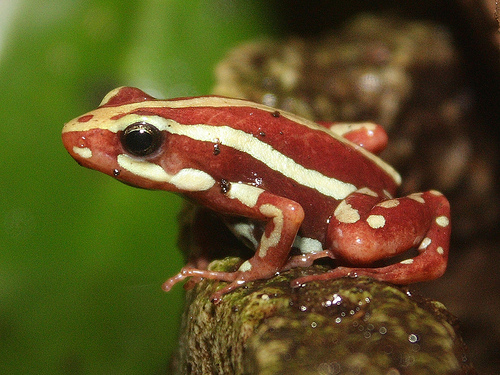
The Phantasmal Poison Frog or Phantasmal Poison-dart Frog isn't even as big as a 50-Cent Euro-coin. Nevertheless you can find him fast in his terrarium as he is of striking red colour. In combination with the three white stripes he shows a nice warning colouration which says: Don't touch! Poisonous! The poison-dart frogs are the second-venomous animals in the world coming right after the Zoanthids (a kind of anemone). Phantasmal poison frogs have one of the strongest toxins of frogs. Their toxicity is known to be lethal. One of commonly related organisms, the blue triden frog, is frequently mistaken for the Phantasmal poison dart frog. A phantasmal poison frog (Epipedobates tricolor) is a species of poison dart frog. Their natural habitat is the Andean slopes of the central Ecuadorian Bolívar province. They have radiant color, powerful poison, and yet are some of the smallest frogs around.


Phantasmal Poison Frog

Phantasmal Poison frog or Three-striped Poison Frog toxins come from the amphibian's diet synthesized  from toxic chemicals from the ants. millipedes and other poisonous invertebrates that the frogs eat. Captive-born poison frogs  don't have venomous skin secretions unless their diet has the poisonous invertebrates that the species normally eats in the wild. The  Aquarium staff has take pains to provide their phantasmal poison frogs with the proper diet assuring a high level of toxic secretions. The tiny frogs are part of a group of diverse amphibians known as "poison dart" or "poison arrow" frogs a description coined by Amazon explorers in the 19th Century. The frogs' venom was used by indigenous South American natives to coat darts projected by wind-driven devices called blowpipes.


Distribution-Central Ecuador
Habitat-tropical forest
Food-fruit flies, springtails
Social behavior-diurnal, strongly territorial
Characteristics-glaring red skin with three white stripes, small
breeding time: 14 - 21 days / 20 - 25 eggs
weight: 0 gramme
length: 1.9 - 2.7 cm

Phantasmal Poison Frog


Fascinating Facts
Through their skin, poison-dart frogs excrete a venomous alkaloid which they accumulated in their body by eating poisonous animals. The toxin is a convulsant poison that leads to respiratory and muscle paralysis and leads to dead within 20 minutes.
 
Endangerment
International Union for Conservation of Nature and Natural Resources - Endangered

Yellow Banded Poison Dart Forg Habitat and Reproduction

The yellow-banded poison dart frog is found in the neo-tropical region that includes Venezuela, northern Brazil, Guyana, and southeastern Colombia. They prefer humid or wet habitats and can be found on forest soil, moist stones, wet tree trunks, and roots of rainforest trees.

The yellow-banded poison dart frog is one of the largest species in this genus, with an adult body length averaging 1.57 inches. Their average weight is 0.11 ounces. Females are larger and more robust than males. They have distinctive yellow and black bands across the body. As the frog ages, the black bands often break off into spots. These frogs also have glandular adhesive pads on their toes and fingertips, which help them adhere to plant surfaces, allowing them to climb and cling. The bright coloration represents a warning of danger or distastefulness to potential predators. They produce toxic chemicals in their skin, making them poisonous to most would-be predators. Lifespan: In the Wild 5-7 years; In Captivity 10-15 years (record is 20.5 years).

Yellow-Banded Poison Dart Frogs


Behaviors
Yellow-banded poison dart frogs are diurnal (active during the day and rest at night), living mainly on the ground and also climbing into trees. Males are very territorial and can be aggressive in defense of a calling/breeding territory. When not breeding, they are solitary. The size of their territory is unknown. Males vocalize to attract females during breeding season. Males also use visual cues and show off their colors. They depend on vision to locate prey. Tadpoles use vibrations in water to signal their presence in a water pool to adult frogs. If a second tadpole is deposited, the first one will likely eat it. Enrichments at the Zoo: feeding, moving and changing furniture.

Reproduction
Yellow-Banded Poison Dart Frogs

Females reach sexual maturity at 2 years of age. Breeding occurs in February and March, occurring once
during the rainy season. During the mating season, males use vocalizations such as chirps, buzzes, trills, and hums to get the attention of females. Calling is most intense for an hour or two after sunrise and before sunset. They also show off their brightly colored bodies. Tactile (touching) communication is also important in breeding.

Females compete for males. After she chooses a mate, she follows him to his chosen breeding ground. She deposits her eggs (2-12 eggs in a clutch; up to 1000 in a breeding season) usually on leaves, in areas of high humidity. Then the male cares for the eggs, keeping them moist. Eggs hatch into tadpoles about 10-14 days after fertilization. He also cares for the hatched tadpoles. The tadpoles ride on the father’s back while he climbs up into the forest canopy, where he deposits the tadpoles into one of a variety of water-holding plants. Some reports say that he carries them in his mouth. Bromeliads are ideal for the tadpoles because they have many cup-like leaves filled with water. One tadpole is placed in each pocket of water. After 70-90 days, tadpoles have fully changed into froglets. They are mature at 12-18 months of age.

Conservation Status

IUCN status: not listed; CITES Appendix: not listed
Yellow-banded poison dart frogs are poorly known in the wild, but are common in captivity. Their numbers in the wild are declining due to exploitation and destruction of their habitat for lumber.
They are also collected for the pet trade. Predators: adults are preyed upon by some snakes, humans (many predators are obviously repelled by the toxic skin secretions); tadpoles are preyed upon by damselfly nymphs

Wednesday, May 25, 2011

Poison Dart Frog Amazing tail Colour

Poison dart frogs wear some of the most brilliant and beautiful colors on Earth. Depending on their habitats, which are from the tropical forests of Costa Rica to Brazil, their coloring can be yellow, gold, copper, red, green, blue, or black. Their designs and colors scare off predators. You may have seen monkeys carrying their children on their backs. Well, some of these frogs show some of these parenting habits, including carrying both eggs and tadpoles on their backs. These frogs are some of the most toxic animals on Earth. The two-inch-long Golden Poison Dart Frog has enough venom to kill 10 grown men. Indigenous people of Colombia have used its powerful venom for centuries to tip their blowgun darts when hunting.

BLUE POISON DART FORG

Scientists are not sure why these poison dart frogs are so poisonous, but it is possible they take in plant poisons which are carried by their prey, including ants, termites and beetles. Poison dart frogs raised in captivity and isolated from insects in their native habitat never develop venom. The medical research community has been exploring ways to use poison dart frog venom in medicine. Scientists have already used their venom to create a painkiller medicine.

Dyeing Poison Dart Frog

Strawberry Poison-Dart Frog

The Strawberry poison-dart frog, D. pumilio, is a tropical poison-dart frog found in the lowland Atlantic regions of Nicaragua, Costa Rica, and Panama (Reynolds et al, 2007). This anuran is a member of the family Dendrobatidae (Pröhl and Hödl, 1999) and a member of the pumilio group which contains two other dendrobatids; D. granuliferus and D. speciosus (Silverstone, 1975). The Dendrobatidae family contains approximately 170 described species and six genera, including Dendrobates (Claire et al, 2005). Some
anatomical characteristics include smooth or slightly granular skin, a round tympanum one-half the diameter of the eye, finger disks that are not sexually dimorphic, and a tarsal tubule that is only slightly developed if present at all (Silverstone, 1975).

Strawberry Poison-Dart Frog

D. pumilio inhabits lowland tropical wet forest zones and fruit plantations (Pröhl and Hödl, 1999) residing in microhabitats of fallen logs and bromeliads when in exposed areas (Silverstone, 1975). D. pumilio are terrestrial and diurnal frogs spending most of their time within 1 meter from the forest floor (Pröhl, 2002). Dendrobatids are active, diurnal foragers (Donnelly, 1991). Being terrestrial, the Strawberry poison-dart frog primarily feeds on small invertebrates which inhabit detritus material on the forest floor (Silverstone, 1975). Ants and mites which are available year round are the primary food source for D. pumilio. There are some dietary differences between adult Strawberry poison-dart frogs that could be a result of differences in behavior (Donnelly, 1991) which will be discussed in greater detail later in the paper.

Some physical characteristics include aposematic coloration, which, as in many other dendrobatids, serves as an effective signal to predators of their toxic skin alkaloids (Pröhl, 2002). There have been more than 80 alkaloids isolated from the skins of D. pumilio (Donnelly, 1989b). D. pumilio is unique regarding this aposematic coloration due to the fact that intraspecific differentiation in this frog is one of the most dramatic
cases of divergence among populations ever discovered (Summers et al, 1999); in regions of Panama, coloration can vary between the more common color of red or orange to blue, green, black, yellow and white and spotted and speckled patterns (Reynolds et al, 2007). There is usually only one color pattern in a given population (Silverstone, 1975).

GOLDEN Poison-Dart Frog

The throat coloration in males is usually darker than that of females and there are usually dark, black dots on the venter and dorsum (Silverstone, 1975). Like other Poison-dart frogs, D. pumilio exhibits elaborate social behavior; the species exhibits parental care and males are extremely territorial and aggressive (Donnelly, 1989a&b; Pröhl, 2002).

Reproduction and Parental Care

Among all of the anuran families, Poison-dart frogs are said to have the most elaborate social interactions (Donnelly, 1989a), which are seen most often during periods of mating. Mating is polygamous in D. pumilio; females and males mate several times with different mates during mating periods. This system of mating is associated with the tropical environment the frogs inhabit which prolongs availability of food, water and
other resources which allow females to continuously reproduce (Pröhl and Hödl, 1999). Courtship in D. pumilio takes approximately 10-98 minutes (Donnelly, 1989a) occurring on the forest floor during the day (Summers et al, 1999), usually in the morning (Pröhl and Hödl, 1999) and is initiated by the female who receptively approaches a calling male (Summers et al, 1999). The female will continue to approach the male and will often use tactile methods; she will stroke and nudge the male in approval (Reynolds et al, 2007; Summers et al, 1999).

Dyeing Poison Dart Frog

Encouraged by the female’s behavior, the male will continue to call and move away from her, eventually leading her to the oviposition site as she follows (Summers et al, 1999). Summers (1999) comments that females do not normally interact with other adults outside the context of courtship; D. pumilio is actually not a social species. Because D. pumilio is not a social species, Summers (1999) asserts that their
“courtship behavior provides an unambiguous assay of mate choice in this species”; when this frog does choose to interact with other frogs, it makes it easier to observe which frogs they prefer to associate with.

Once courtship has been initiated and the female has chosen the male, they deposit egg and sperm in a terrestrial moist location of the oviposition site while in a vent-to-vent contact (Donnelly, 1989a). Oviposition sites are usually in dense leaf litter on the forest floor (Donnelly, 1989a&b), which provides a moist microhabitat for the eggs to develop into tadpoles. Clutches are relatively small, averaging about 4.6 eggs per
clutch (Pröhl and Hödl, 1999). D. pumilio, like many Poison-dart frogs exhibit parental care from the male or the female in most species (Donnelly, 1989a). D. pumilio males attend to the eggs once they are fertilized (Donnelly, 1989a) by moistening them once a day (Pröhl, 2002), shedding water on them (Summers et al, 1997) until they develop into tadpoles, a process that takes approximately 10-14 days (Donnelly, 1989a). The males do not, however carry or feed the tadpoles (Summers et al, 1997) in their parental care.

BLACK MAMBA SNAKES DENDROASPIS POLYLEPIS

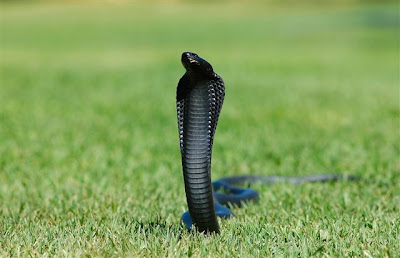
The Black Mamba (Dendroaspis polylepis) is well known to show defensive behavior, such as raising the front part of the body and spreading a narrow hood (Ionides 1969. Mambas and Man-Eaters: A Hunter’s Story. Postscript by Dennis Holman, Mayflower, London, pp. 1–236). On 27 February 2002, while conducting field studies in Botswana, we observed an unusual defensive behavior by a female D. polylepis that, to our knowledge, has not been recorded in this species. On 26 February at ca. 2100 h as we spotlighted, we sighted the snake climbing an acacia tree (5 m) at a private game ranch situated in the southeastern part of the country.

Nocturnal activity by mambas is poorly understood and rarely recorded; this is the first individual we encountered active at night. After a minor chase the snake was captured, measured (ca. 2.5 m TL), and sexed, whereupon it was placed into a cloth bag to be photographed the next day. On 27 February, at about
0800 h, the snake was removed from the bag and allowed to climb another small tree where it was to be photographed. The snake moved in the tree and after about 15 minutes it descended to the ground. Because we also wanted photographs of it on the ground we approached it to within a distance of ca. 2 m whereupon it displayed its typical defensive behavior (i.e., raising of the front part of the body off the ground and spreading of a narrow hood).

BLACK MAMBA

We remained still and the Black Mamba snake lost interest in us and moved into an open area. One of us investigated how the snake would react if it were constantly cornered (it was not allowed to approach any of the nearby thickets, which were ca. 10 m away). The Black Mamba snake again reacted by raising the front part of the body and spreading a hood. However, walking around the snake at a distance of about 2 m for 5–10 min made it impossible for it to reach the thickets. At the end of this exercise, the snake displayed a very peculiar defensive behavior. It coiled up and hid its head under the coils and raised the tail tip about 20–30 cm above the ground. The tail was constantly moving in the middle of the coiled snake, a behavior very similar to what has been described as defensive behavior in the garter snake Thamnophis radix (Arnold and Bennett 1984. Anim. Behav. 32:1108–1118). We are certain that this behavior was not caused by heat stress. Such tail displays have been suggested to divert attacks to a more ‘disposable’ part of the body compared to attacks directed to the head, which is common among several avian and mammalian predators (Jackson 1979. Copeia 1979:169–172).

It is interesting to note that in a very thorough study of temporal and spatial ecology of D. polylepis in South Africa, individual identity of the specimens studied was based upon on scarring and bits of tail missing (Phelps 2002. Herpetol. Bull 80:7–19). Thus, perhaps the latter injuries might have been due to predator attacks
on individuals displaying behavior similar to tail-raising observed by us.

WESTERN DIAMONDBACK RATTLESNAKE IN NORTHWEST WILDLIFE

Among the many varieties of rattlesnakes found in North America, the Western Diamondback Rattlesnake stands out due to its unique triangular shaped head, a feature unique to its species. It is also unique in its coloring and diamond shaped markings. It lives on dry, shrub covered rocky terrain and preys on small mammals.

The Western Diamondback Rattlesnake is one of the largest rattlesnakes found in North America, growing to a length of 60(0.6 meters) to 160 centimeters (1.6 meters). They weigh between 4 ounces (113 grams) and 20 pounds (9 kilograms). The Western Diamondback Rattlesnake lives to 30 years on average, ten to twenty years longer than other rattlesnake species.


Western Diamondback Rattlesnake

The Western Diamondback Rattlesnake is noted not only for its size, but also its unique appearance. It is characterized by a plump body, a short tail, eyes with vertical pupils, and a broad triangular head which is distinct compared to the rest of its body. Its coloring ranges from yellowish-gray to pale blue or pinkish with dark diamond-shaped markings down its back. These marks are lighter in the center with dark edges that are
surrounded by a light border making for a very interesting pattern surrounding the whole body of the snake. These marks are irregularly dispersed along the dorsal side of the snake.

The rattlesnake also has a rattle at the end of its tail. Its rattle is made up of the last scale left when the snake undergoes molting (the process of shedding its skin).With each molt, the snake gains a new layer to its rattle at the same time as the old one is shed. The rattle is made of rings or segments of keratin, the same material found in human fingernails. The rattle is a very important aspect of the snake’s overall anatomy because it
enables it to ward off predators. The Western Diamondback Rattlesnake is often confused with many other snakes with blotch-like markings such as Gopher snakes whose blotches have a checkered pattern, Hognose Snakes which have a distinctly upturned snout and large blotches on their belly and Night Snakes which have vertical pupils that are much smaller and more slender than those of the Western Diamondback Rattlesnakes. Although all of these snakes may resemble the rattlesnake in some way, none have its distinct triangular head and rattle.

Western Diamondback Rattlesnake


The Western Diamondback Rattlesnake belongs to the Viperidae family of reptiles (scientific name Crotalinae) which are characterized by long teeth called fangs. These fangs are used to subdue and kill prey. They are sometimes left with the prey and are replaced two to four times a year by a reserve set. There are two races of Western Diamondback Rattlesnake found in Canada. One is the Prairie Rattler, found in Alberta and Saskatchewan and the other the Northern Pacific Rattler, found in arid valleys throughout British Columbia. The Prairie Rattler is the lighter in hue of the two species.

Both are known as pit vipers because of the pit organ found between the snake’s nostrils and eyes. The pit organ, also known as the Jacobson’s organ, detects temperature differences between the interior temperature of the snake’s body and the outside surrounding temperature which assists the snake to find its prey to a temperature difference of less than .5 of a degree. The pit organ is located on the top of the snake’s mouth. The Western Diamondback Rattlesnake is a cold-blooded reptile because their internal temperature changes according to their outside surroundings. The Western Diamondback Rattlesnake has to rely on the heat generated by the sun to heat its body which functions best at a temperature of 86 degrees Fahrenheit, (30 degrees Celsius) enabling the snake to move and digest its food easier. At colder temperatures, the major
organs of the snake may stop working properly which could lead to death.

Komodo Dragon Habitat Komodo Island

A deer nimbly picks its way down a path meandering through tall savanna grasses. It is an adult male of its species, Cervus timorensis, weighing some 90 kilograms (about 200 pounds). Also known as a Rusa deer, the animal knows this route well; many deer use it frequently as they move about in search of food. This Rusa's home is the Indonesian island of Komodo, a small link in a chain of islands separating the Flores Sea from the Indian Ocean. Most wildlife find survival a struggle, but for the deer on Komodo, and on a few of the nearby islands, nature is indeed quite red in tooth and claw. This deer is about to encounter a dragon.

The Komodo dragon, as befits any creature evoking a mythological beast, has many names. It is also the Komodo monitor, being a member of the monitor lizard family, Varanidae, which today has but one genus, Varanus. Residents of the island of Komodo may call it the ora. Among some on Komodo and the islands of Rinca and Flores, it is buaja darat (land crocodile), a name that is descriptive but inaccurate; monitors are not crocodilians. Others call it biawak raksasa (giant monitor), which is quite correct; it ranks as the largest of the monitor lizards, a necessary logical consequence of its standing as the biggest lizard of any kind now living on the earth. (A monitor of New Guinea, Varanus salvadorii, also known as the Papua monitor, may be longer than the lengthiest Komodo dragons. The former's lithe body and lengthy tail, however, leave it short of the thickset, powerful dragon in any reasonable assessment of size.) Within the scientific community, the dragon is Varanus komodoensis. And most everyone also calls it simply the Komodo.

Komodo Dragon

The Komodo's Way of Life

The deer has wandered within a few meters of a robust male Komodo, about 2.5 meters (eight feet) long and weighing 45 kilograms. The first question usually asked about Komodos is, how big do they get? The largest verified specimen reached a length of 3.13 meters and was purported to weigh 166 kilograms, which may have included a substantial amount of undigested food. More typical weights for the largest wild dragons are about 70 kilograms; captives are often overfed. Although the Komodo can run briefly at speeds up to 20 kilometers per hour, its hunting strategy is based on stealth and power. It has spent hours in this spot, waiting for a deer, boar, goat or anything sizable and nutritious.

Monitors can see objects as far away as 300 meters, so vision does play a role in hunting, especially as their eyes are better at picking up movement than at discerning stationary objects. Their retinas possess only cones, so they may be able to distinguish color but have poor vision in dim light. Today the tall grass obscures
the deer.

Komodo Dragon

Should the deer make enough noise the Komodo may hear it, despite a mention in the scientific paper first reporting its existence that dragons appeared to be deaf. Later research revealed this belief to be false, although the animal does hear only in a restricted range, probably between about 400 and 2,000 hertz.
(Humans hear frequencies between 20 and 20,000 hertz.) This limitation stems from varanids having but a single bone, the stapes, for transferring vibrations from the tympanic membrane to the cochlea, the structure responsible for sound perception in the inner ear. Mammals have two other bones working with the stapes to amplify sound and transmit vibrations accurately.

In addition, the varanid cochlea, though the most advanced among lizards, contains far fewer receptor cells than the mammalian version. The result is an animal that is insentient to such sounds as a low-pitched voice or a high-pitched scream.

The Komodo makes its presence known when it is about one meter from its intended victim. The quick movement of its feet sounds like a "muffled machine gun," according to Walter Auffenberg, who has contributed more to our knowledge of Komodos than any other researcher. Auffenberg, a herpetologist at the University of Florida, lived in the field for almost a year starting in 1969 and returned for briefer study periods in 1971 and again in 1972. He summed up the bold, bloody and resolute nature of the Komodo assault by saying, "When these animals decide to attack, there's nothing that can stop them." That is, there is nothing that can stop them from their attempt--most predator attacks worldwide are unsuccessful. The difficulties in observing large predators in dense vegetation turn some quantitative records into best estimates, but it is informative that one Komodo followed by Auffenberg for 81 days had only two verified kills, with no evidence for the number of unsuccessful attempts

Jikin Goldfish Amazing View Top Down

Jikin Goldfih originally defined as having similar body shape to the Wakin. Jikin head “upturned” – unique to this fish. Tail structure different; tail must form an “X” and be perpendicular to the body. Coloration important to fish – best specimens have pure white (silver) body with twelve red markings. Jikin should be observed from side and top; swimming motion important and Jikin that have clumsy swimming motion are considered inferior Notice compact body shape; “X” shape of tail; head should be upturned (not shown on line drawing); thick caudal peduncle.

Jikin Goldfish


Jikin is Excellent side view of Jikin, showing upturned head, proper coloring, and spread of tail.  Very good side view of Jikin, upturned head not yet developed; coloring good (if somewhat heavy), good tail spread. Top down view of Jikin showing tail spread; note that colors are not “perfect.”

Another top down view of Jikin, although tail spread not as good on previous picture, and coloring not as good as “Ideal” 12 color red. Top down view of immature Jikin, showing better tail spread and development of red color in proper 12 spot configuration.

Jikin Goldfish

CARE BRED AND HEALTHY SEAHORSES

This care sheet provides guidelines for maintenance of captive-bred (CB) seahorses by new seahorse keepers. Wild caught (WC) seahorses bring with them a host of challenging husbandry issues and often they do not survive for long. CB seahorses, properly cared for, live for several years in the aquarium. Wild caught seahorses appear to be cheaper, but cost more to maintain. We recommend all beginner keepers purchase captive bred seahorses only.

Selecting healthy seahorses
If you are buying from your local fish store (LFS), observe the seahorses carefully before you purchase. If buying from an e-tailer, be sure they have a good reputation and live guarantee. Confirm the seahorses are captive bred. It is important to observe/ask:
• Is the seahorse eating?
• What food is it eating and how often is it being fed?
• Is the body well-rounded with no signs of abdominal concavity?

Do not buy a seahorse that is not eating. You should be able to observe CB seahorses eating frozen mysis shrimp, krill or plankton. If a CB seahorse is not eating frozen food, it may not truly be CB, or it may not be healthy. The dwarf seahorse, H.zosterae, is an exception, whether CB or WC, it requires live food, generally enriched brine shrimp nauplii.


Potential problems
Do not buy a seahorse if you see:
Signs of skin sloughing or discoloration, inflammation, odd swimming behaviour, not using a hold-fast, lying on substrate or hitching upside down, minimal eye movement, protruding eyes, blisters, inflamed gill slits,
eroded snout, body or tail lesions or continuous heavy respiration. If you observe any of the above signs, play it safe and pass on the purchase. Do not try to "rescue" an obviously malnourished or sick seahorse.

Acclimation and Quarantine
It is good standard practice even for CB seahorses to be given a freshwater dip or formalin bath and be kept in a quarantine tank for six weeks before introducing them to a tank with other seahorses. Observe new purchases carefully for any odd behaviour or external lesions, spots or other anomalies. Usually the first sign of illness is cessation of appetite. If illness is suspected, refer to the disease guide and treatment recommendations on www.seahorse.org. Alternately, you can post on the discussion board in the Emergency Forum. Several expert keepers will be available to help you. Do not treat a seahorse without knowing what is affecting it. Only use recommended treatments.


The seahorse tank
Before you buy a seahorse, be sure you understand the basic principles of how to keep seahorses in the home aquarium. Keeping marine fish of any type requires knowledge of basic marine aquarium keeping and water chemistry. There are many books and other sources of information available. If you prepare adequately and set up an appropriate sized, fully cycled, and stable tank, you will greatly improve your chances of success.

Seahorses need “hitching posts”something to cling to while they are resting. Not having these resting places is stressful for a seahorse. Seahorses should be introduced into a mature, cycled aquarium. Various filtration methods and tank set-ups can result in a healthy, stable aquarium. A seahorse tank must have gentle to moderate currents, with 3–5 times tank volume turned over per hour. Water parameters should be stable
before animals are added:


pH – 8.0 to 8.3
Specific gravity – 1.020 to 1.024
Ammonia – 0
Nitrite – 0
Nitrate – <20 ppm

Optimum temperature is dependent on whether the seahorse species is tropical, subtropical or temperate. Generally, beginners should start with tropical species as heating a tank is much less expensive than cooling one, and it is easier to maintain a stable temperature in a tropical tank. Try to keep to the lower end of the temperature ranges, and let the temperature fluctuate up towards the higher values of the temperature range.
Taller tanks are preferred. Seahorses need height (2.5 to 3 times the uncurled length of the animals) in their tanks to court and mate. As a minimum, the internal height of the tank, excluding the substrate, should be
at least 2 times the uncurled length of the seahorse you are keeping.


Temperature and stocking density table for common seahorse species

Use this table as a guide. While we list a recommended volume per pair of seahorses, this volume per pair is not the same as the minimum recom mended tank size. For example, for H.erectus, allow the first pair 15 gallons, then 8 gallons per pair after that.

Nutrition
We recommend you purchase CB seahorse species that have been trained to eat frozen foods. This makes feeding a simple task. Offer the frozen food, pre-thawed and rinsed, once or twice daily. You can supplement
frozen foods with live foods offered once per week for nutritional variety. Frozen food can be supplemented with fish vitamins, carotenoids and HUFA (highly unsaturated fatty acids, such as Selcon or Zoecon). An
exception to this recommendation is if you use Piscine Energetics brand frozen mysis, which does not require HUFA supplementation. Live foods should be gut-loaded with nutritious and vitamin-supplemented foods prior to feeding.

Starfish is Amazing Habitat Under Water

Starfish have amazing powers of regeneration. If they lose an arm, they will re-grow it! Some can even re-grow a whole new body from a single arm. Starfish are among the most familiar of marine animals and possess a number of widely known traits, such as regeneration and feeding on mussels. Starfish possess a wide diversity of body forms and feeding methods. The extent that Asteroidea can regenerate varies with individual species. Starfish typically have five rays or arms, which radiate from a central disk. However, several species frequently have six or more arms. Several asteroid groups, such as the Solasteridae, have 10-15 arms whereas some species, such as the Antarctic Labidiaster annulatus can have up to 50. It is not unusual for species that typically have five-rays to exceptionally possess six or more rays due to developmental abnormalities.


The starfish bodies of starfish are composed of calcium carbonate components, known as ossicles. These form the endoskeleton, which takes on a variety of forms that are externally expressed as a variety of structures, such as spines and granules. The architecture and individual shape/form of these plates which often occur in specific patterns or series, as well as their location are the source of morphological data used to classify the different groups within the Asteroidea. Several groups of asteroids, including the Valvatacea but especially the Forcipulatacea possess small bear-trap or valve-like structures known as pedicellariae. These can occur widely over the body surface. In forcipulate asteroids, such as Asterias or Pisaster, pedicellariae occur in pom-pom like tufts at the base of each spine, whereas in goniasterids, such as Hippasteria, pedicellariae are scattered over the body surface. Although the full range of function for these structures is unknown, some are thought to act as defense where others have been observed to aid in feeding.


Spiny skinned
Starfish belong to a group of animals called ‘Echinoderms’ which means spiny skinned (echino- spiny and derm-skin). Their body is covered in plates. These plates can be large or small, soft or spiky.

Flat with arms
Starfish have a flattened body with 5 or more arms extending from a central disc. They have no bones, no heart, no brain and no eyes. Their mouth is under their body and their bottom is on top.

Hundreds of feet
Beneath each arm, starfish have rows of up to 200 ‘tube feet’. To move starfish pump water in and out of their feet. Feet come in different shapes and each shape is suited to where the starfish lives. To cling tightly to rocks reef starfish have suckers on the end of their feet. Sand starfish have pointed feet to help them dig.


Unique eaters
To eat mussels and oysters, starfish use their tube feet to open the shells. They then push their stomach out of their body, into the shell and onto their food. Once it has soaked up its food the starfish pulls its stomach back in!

Big and small, shallow and deep
Starfish can grow to less than a centimeter in size or to over 1m! They can be found in shallow water or the deep sea and on rocks, reefs, mud or sand.

First Aid Treatment Snake Venom

The special danger of rapidly developing paralytic envenoming after bites by some elapid snakes: use of pressure-immobilisation

First aid treatment is carried out immediately or very soon after the bite, before the patient reaches a dispensary or hospital. It can be performed by the snake bite victim himself/herself or by anyone else who is present. Unfortunately, most of the traditional, popular, available and affordable first aid methods have proved to be useless or even frankly dangerous. These methods include:
making local incisions or pricks/punctures (“tattooing”) at the site of the bite or in the bitten limb, attempts to suck the venom out of the wound, use of (black) snake stones, tying tight bands (tourniquets) around the limb, electric shock, topical instillation or application of chemicals, herbs or ice packs. Local people may have great confidence in traditional (herbal) treatments, but they must not be allowed to delay medical treatment or to do harm.


As far as the snake is concerned – do not attempt to kill it as this may be dangerous. However, if the snake has already been killed, it should be taken to the dispensary or hospital with the patient in case it can be identified. However, do not handle the snake with your bare hands as even a severed head can bite! The special danger of rapidly developing paralytic envenoming after bites by some elapid snakes: use of pressure-immobilisation Bites by cobras, king cobras, kraits or sea snakes may lead, on rare occasions, to the rapid development of life-threatening respiratory paralysis. This paralysis might be delayed by slowing down the absorption of venom from the site of the bite. The following technique is currently recommended:

Pressure immobilisation method. Ideally, an elasticated, stretchy, crepe bandage, approximately 10 cm wide and at least 4.5 metres long should be used. If that it not available, any long strips of material can be used. The bandage is bound firmly around the entire bitten limb, starting distally around the fingers or toes and
moving proximally, to include a rigid splint. The bandage is bound as tightly as for a sprained ankle, but not so tightly that the peripheral pulse (radial, posterior tibial, dorsalis pedis) is occluded or that a finger cannot easily be slipped between its layers.

Ideally, compression bandages should not be released until the patient is under medical care in hospital, resuscitation facilities are available and antivenom treatment has been started.

Tight (arterial) tourniquets are not recommended!

Traditional tight (arterial) tourniquets. To be effective, these had to be applied around the upper part of the limb, so tightly that the peripheral pulse was occluded. This method was extremely painful and very dangerous if the tourniquet was left on for too long (more than about 40 minutes), as the limb might be damaged by ischaemia. Many gangrenous limbs resulted!

Unfortunately, most of the traditional, popular, available and affordable first aid methods have proved to be useless or even frankly dangerous. These methods include:
making local incisions or pricks/punctures (“tattooing”) at the site of the bite or in the bitten limb, attempts to suck the venom out of the wound, use of (black) snake stones, tying tight bands (tourniquets) around the limb, electric shock, topical instillation or application of chemicals, herbs or ice packs. Local people may have great confidence in traditional (herbal) treatments, but they must not be allowed to delay medical treatment or to do harm.

As far as the snake is concerned – do not attempt to kill it as this may be dangerous. However, if the snake has already been killed, it should be taken to the dispensary or hospital with the patient in case it can be identified. However, do not handle the snake with your bare hands as even a severed head can bite!

Viper and cobra bites Venom
The pressure-immobilisation method as described above will increase intracompartmental pressure and, by localising the venom, might be expected to increase the locally-necrotic effects of viper venoms and some cobra venoms. The use of a local compression pad applied over the wound, without pressure bandaging of the entire bitten limb, has produced promising results in Myanmar and deserves further study.

Transport to Hospital

The patient must be transported to a place where they can receive medical care (dispensary or hospital) as quickly, but as safely and comfortably as possible. Any movement, but especially movement of the bitten limb, must be reduced to an absolute minimum to avoid increasing the systemic absorption of venom. Any muscular
contraction will increase this spread of venom from the site of the bite. A stretcher, bicycle, cart, horse, motor vehicle, train or boat should be used, or the patient should be carried.

Treatment in the Dispensary or Hospital

Rapid clinical assessment and resuscitation
Cardiopulmonary resuscitation may be needed, including administration of oxygen and establishment of intravenous access. Airway, respiratory movements (Breathing) and arterial pulse (Circulation) must be checked immediately. The level of consciousness must be assessed. The following are examples of clinical situations in which snake bite victims might require urgent resuscitation:

• Profound hypotension and shock resulting from direct cardiovascular effects of the venom or secondary effects such as hypovolaemia or haemorrhagic shock.
• Terminal respiratory failure from progressive neurotoxic envenoming that has led to paralysis of the respiratory muscles.
• Sudden deterioration or rapid development of severe systemic envenoming following the release of a tight tourniquet or compression bandage.
• Cardiac arrest precipitated by hyperkalaemia resulting from skeletal muscle breakdown (rhabdomyolysis) after sea snake bite.
• Late results of severe envenoming such as renal failure and septicaemiacomplicating local necrosis.


Snake Venoms Composition of Venom Injected at a Bite

Snake Venoms contain more than 20 different constituents, mainly proteins, including enzymes and polypeptide toxins. The following venom constituents cause important clinical effects:
Procoagulant enzymes (Viperidae) that stimulate blood clotting but result in incoagulable blood. Venoms such as Russell’s viper venom contain several different procoagulants which activate different steps of the clotting cascade. The result is formation of fibrin in the blood stream. Most of this is immediately broken down by the body’s own fibrinolytic system. Eventually, and sometimes within 30 minutes of the bite, the levels of clotting factors have been so depleted (“consumption coagulopathy”) that the blood will not clot.


Haemorrhagins (zinc metalloproteinases) that damage the endothelial lining of blood vessel walls causing spontaneous systemic haemorrhage.

Cytolytic or necrotic toxins - these digestive hydrolases (proteolytic enzymes and phospholipases A) polypeptide toxins and other factors increase permeability resulting in local swelling. They may also destroy cell membranes and tissues.

Haemolytic and myolytic phospholipases A2 - these enzymes damage cell membranes, endothelium, skeletal muscle, nerve and red blood cells.

Pre-synaptic neurotoxins (Elapidae and some Viperidae) - these are phospholipases A2 that damage nerve endings, initially releasing acetylcholine transmitter, then interfering with release.

Post-synaptic neurotoxins (Elapidae) - these polypeptides compete with acetylcholine for receptors in the neuromuscular junction and lead to curare-like paralysis.


Quantity of Venom Injected at a Bite

This is very variable, depending on the species and size of the snake, the mechanical efficiency of the bite, whether one or two fangs penetrated the skin and whether there were repeated strikes. The snake may be able to control whether or not venom is injected. For whatever reason, a proportion of bites by venomous snakes do not result in the injection of sufficient venom to cause clinical effects. About 50% of bites by Malayan pit vipers and Russell’s vipers, 30% of bites by cobras and 5-10% of bites by saw-scaled vipers do not result in any symptoms or signs of envenoming. Snakes do not exhaust their store of venom, even after several strikes, and they are no less venomous after eating their prey. Although large snakes tend to inject more venom than smaller specimens of the same species, the venom of smaller, younger vipers may be richer in some dangerous components, such as those affecting haemostasis.


How common are snake bitesin Asia?

It is difficult to answer this question because many snake bites and even deaths from snake bite are not recorded. One reason is that many snake bite victims are treated not in hospitals but by traditional healers.

Bangladesh – a survey of 10% of the country in 1988-9 revealed 764 bites with 168 deaths in one year. Cobra bites (34% of all bites) caused a case fatality of 40%.
Bhutan – (no data available)
Cambodia – (no data available)

India – estimates in the region of 200,000 bites and 15-20,000 snake bite deaths per year, originally made in the last century, are still quoted. No reliable national statistics are available. In Year, a thousand deaths were reported in Maharashtra State. In the Burdwan district of West Bengal 29,489 people were bitten in one year
with 1,301 deaths. It is estimated that between 35,000 and 50,000 people die of snake bite each year among India’s population of 980 million.

Indonesia – no reliable data are available from this vast archipelago. Snake bites and deaths are reported from some islands, eg Komodo, but fewer than 20 deaths are registered each year.
Lao DPR – (no data available)
Malaysia – bites are common, especially in northwest peninsular Malaysia, but there are few deaths.

Myanmar (Burma) – snake bites and snake bite deaths have been reliably reported from colonial times. Russell’s vipers are responsible for 90% of cases. In 1991, there were 14,000 bites with 1,000 deaths and in 1997, 8,000 bites with 500 deaths. Under-reporting is estimated at 12%. There are peaks of incidence in May and June in urban areas and during the rice harvest in October to December in rural areas.

Nepal – there are estimated to be at least 20,000 snake bites with about 200 deaths in hospitals each year, mainly in the Terai region. One survey suggested as many as 1,000 deaths per year. Among 16 fatalities recorded at one rural clinic during a monsoon season, 15 had died on their way to seek medical care.

Pakistan – there are an estimated 20,000 snake bite deaths each year
Philippines – there are no reliable estimates of mortality among the many islands of thearchipelago. Figures of 200-300 deaths each year have been suggested. Only cobras cause fatal envenoming, their usual victims being rice farmers.

Sri Lanka – epidemiological studies in Anuradhapura showed that only twothirds of cases of fatal snake bite were being reported to the Government Agent Statistical Branch. However, the Registrar General received reports of more than 800 deaths from bites and stings by venomous animals and insects in the late 1970s and
the true annual incidence of snake bite fatalities may exceed 1,000.

Thailand – between 1985 and 1989, the number of reported snake bite cases increased from 3,377 to 6,038 per year, reflecting increased diligence in reporting rather than a true increase in snake bites; the number of deaths ranged from 81 to 183 (average 141) per year. In 1991 there were 1,469 reported bites with five deaths, in 1992, 6,733 bites with 19 deaths and, in 1994, 8,486 bites with eight deaths. Deaths reported in hospital returns were only 11% of the number recorded by the Public Health Authorities. In a national survey of dead snakes brought to hospital by the people they had bitten, 70% of the snakes were venomous species, the most commonly brought species being Malayan pit viper (Calloselasma rhodostoma) 38%, white-lipped green pit viper (Trimeresurus albolabris) 27%, Russell’s viper (Daboia russelii siamensis) 14%, Indo-Chinese spitting cobra (Naja siamensis) 10% and monocellate cobra (N kaouthia) 7%. In an analysis of 46 fatal cases in which the snake had been reliably identified, Malayan kraits (Bungarus candidus) and Malayan pit vipers were each responsible for 13 cases, monocellate cobras for 12 and Russell’s vipers for seven deaths.

Viet Nam – there are an estimated 30,000 bites per year. Among 430 rubber plantation workers bitten by Malayan pit vipers between 1993 and 1998, the case fatality was 22%, but only a minority had received antivenom treatment. Fishermen are still occasionally killed by sea snakes but rarely reach hospitals.


When Venom Has Been Injected Early Symptoms and Signs

Following the immediate pain of mechanical penetration of the skin by the snake’s fangs, there may be increasing local pain (burning, bursting, throbbing) at the site of the bite, local swelling that gradually extends proximally up the bitten limb and tender, painful enlargement of the regional lymph nodes draining the site of the bite (in the groin – femoral or inguinal, following bites in the lower limb; at the elbow (epitrochlear) or in the axilla following bites in the upper limb). However, bites by kraits, sea snakes and Philippine cobras may be virtually painless and may cause negligible local swelling. Someone who is sleeping may not even wake up when bitten by a krait and there may be no detectable fang marks or signs of local envenoming.

Clinical Pattern of Envenoming by Snakes in South-East Asia

Symptoms and signs vary according to the species of snake responsible for the bite and the amount of venom injected. Sometimes the identity of the biting snake can be confirmed by examining the dead snake; it may be strongly suspected from the patient’s description or the circumstances of the bite or from knowledge of the clinical effects of the venom of that species. This information will enable the doctor to choose an appropriate antivenom, anticipate the likely complications and therefore take appropriate action. If the biting species is unknown, recognition of the emerging pattern of symptoms, signs and results of laboratory tests (“the clinical syndrome”), may suggest which species was responsible.

Venomous Snakes Dangerous and Habitat Of South-East Asia

The geographical area specifically covered by this publication extends from Pakistan and the rest of the Indian subcontinent in the west through to the Philippines and Indonesia in the east, excluding Tibet, China, Taiwan, Korea, Japan, the eastern islands of Indonesia and New Guinea and Australia. In many parts of this region, snake bite is a familiar occupational hazard of farmers, plantation workers and others, resulting in tens of thousands of deaths each year and innumerable cases of chronic physical handicap. Much is now known about the species of venomous snakes responsible for these bites, the nature of their venoms and the clinical effects of envenoming in human patients. This publication aims to pass on a digest of this knowledge to medical doctors, nurses, dispensers and community health workers who have the responsibility of treating victims of snake bite.

Sumatran Cobra

The guidelines are intended to provide enough practical information to allow any medicallytrained person to assess and treat a patient with snake bite at different levels of the health service. Recommendations are based on clinical experience and, where possible, on the results of clinical trials. The restrictions on the size of this
document prevented the inclusion of detailed references to the original publications on which these recommendations were based. These can be found in the papers and reviews listed in “Further Reading”.

I am grateful to the panel of experts who contributed to these Guidelines but I must take responsibility for the writing and editing of the document. I acknowledge the exellent help provided by Miss Eunice Berry (Centre for Tropical Medicine, University of Oxford), who typed the several drafts of the manuscript, and by Ms Vimolsri Panichyanon (Assistant Programme Coordinator, SEAMEOTROPMED Network) and Drs Suvanee Supavej and Parnpen Viriyavejakul (Deputy Assistant Deans for International Relations, Faculty of Tropical Medicine, Mahidol University) who, under the overall direction of Professor Sornchai Looareesuwan, were responsible for organising the meeting of the international panel of experts in Bangkok
on 29/30 November 1998.

Venomous Snakes of South-East Asia

Venomous snakes of medical importance have a pair of enlarged teeth, the fangs, at the front of their upper jaw. These fangs contain a venom channel (like a hypodermic needle) or groove, along which venom can be introduced deep into the tissues of their natural prey. If a human is bitten, venom is usually injected subcutaneously or intramuscularly. Spitting cobras can squeeze the venom out of the tips of their fangs producing a fine spray directed towards the eyes of an aggressor.

Classification
There are two important groups (families) of venomous snakes in South-East Asia Elapidae have short permanently erect fangs. This family includes the cobras, king cobra, kraits, coral snakes and the sea snakes. The most important species, from a medical point of view, include the following:

cobras: N naja common spectacled Indian cobra
(genus Naja) N oxiana North Indian or Oxus cobra
N kaouthia monocellate cobra
N philippinensis Philippine cobra
N atra Chinese cobra
 
spitting cobras: N siamensis
N sumatrana
N sputatrix etc
 
king cobra: Ophiophagus hannah
kraits: B caeruleus common krait
(genus Bungarus) B candidus Malayan krait
B multicinctus Chinese krait
B fasciatus banded krait
Sea snakes (important genera include Enhydrina, Lapemis and Hydrophis)


Viperidae have long fangs which are normally folded up against the upper jaw but, when the snake strikes, are erected. There are two subgroups, the typical vipers (Viperinae) and the pit vipers (Crotalinae). The Crotalinae have a special sense organ, the pit organ, to detect their warm-blooded prey. This is situated between the nostril and the eye.

identify venomous snakes There is no simple rule for identifying a dangerous venomous snake. Some harmless
snakes have evolved to look almost identical to venomous ones. However, some of the most notorious venomous snakes can be recognised by their size, shape, colour, pattern of markings, their behaviour and the sound they make when they feel threatened. For example, the defensive behaviour of the cobras is well
known : they rear up, spread a hood, hiss and make repeated strikes towards the aggressor. Colouring can vary a lot. However, some patterns, like the large white, dark rimmed spots of the Russell’s viper, or
the alternating black and yellow bands of the banded krait, are distinctive. The blowing hiss of the Russell’s viper and the grating rasp of the saw-scaled viper are warning and identifying sounds.

Twitter Delicious Facebook Digg Stumbleupon Favorites More

 
Design by PlanetAnimalZone | Bloggerized by PlanetAnimalZone - PlanetAnimalZone | Animal and Pets Review